
Anti-trafficking in persons Policy
Today, the fact that an adult or child can still be bought and sold, traded and transferred, abused and exploited for private gain or profit should spur us, the Alliance community, to immediate action and we have an opportunity to reinforce the commitment of humanitarians to prevent trafficking in the operations where we work, and to protect and assist victims. It is also the time to take stock of what we are currently doing and reflect on how we can improve.
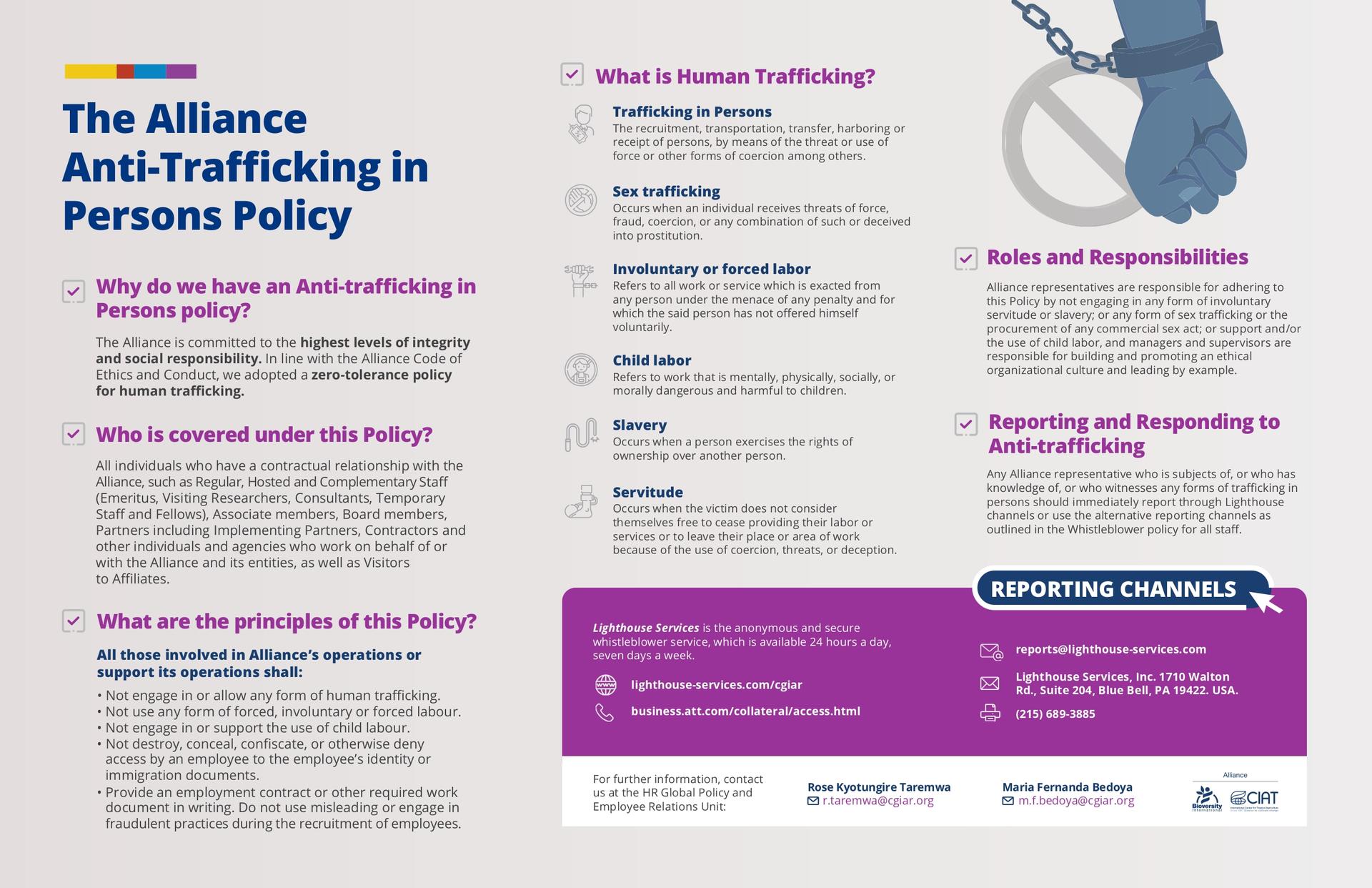
Trafficking in persons is a criminal act that violates fundamental human rights and the inviolable dignity and integrity of the human person. It takes various forms, such as slavery, servitude, forced and compulsory labor, and human trafficking, all of which have in common the deprivation of a person’s liberty by another in order to exploit them for personal or commercial gain. We are committed to acting ethically and with integrity in our business dealings and relationships and to implementing and enforcing systems and controls to ensure trafficking is not taking place in our own business or in our supply chains consistent with disclosure obligations we may have under applicable laws. We expect the same standards from our contractors, suppliers, and other business partners, and as part of our contracting processes, the policy includes specific prohibitions against the use of forced, compulsory or trafficked labor, or anyone held in slavery or servitude, whether adults or children.
The Anti-trafficking in persons policy has been developed through a consultative process with both internal and external stakeholders providing concise guidance that answers the following questions: what is trafficking? What are the roles and responsibilities of involved parties? What does a prevention and monitoring response involve? and how can cases be identified, referred and reported? This guide to initial answers to these questions has clear, robust and sustainable anti-trafficking response as it does not lie with protection alone.
We should endeavor to have Anti-trafficking programming integrated across programs and activities if we are to have successful anti-trafficking efforts with a truly multi-stakeholder approach. Strengthening the humanitarian-development-peace nexus is critical to effective anti-trafficking, as is a localized approach that promotes partnerships with governments, non-governmental organizations, civil society, survivor led organizations, faith leaders, communities and beneficiaries.
Trafficking in persons remains one of the largest rights violations exacerbated in times of crises where the Alliance community does not have a predictable, at-scale way to respond. The Alliance is committed to advancing efforts to respond and doing so in a collective way.
We look forward to working with partners at the field and global level to roll out this Policy as we work towards our common aim of protecting crisis-affected populations.
Download here the Anti-trafficking in persons Policy
For further information, please contact Rose Kyotungire Taremwa ([email protected]) and Maria Fernanda Bedoya ([email protected]) from the HR Global Policy and Employee Relations Unit.