
Juan Jose Gonzalez Guzman
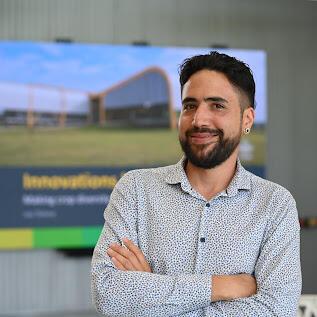
Between 2013 and 2015, Juan Jose Gonzalez Guzman did his undergraduate work in agronomic engineering, which consisted of the evaluation of 15 accessions of wild cherry tomato sown in in-vitro conditions against Fusarium oxysporum causing vascular wilt in tomato, identifying the strain of the pathogen causal agent of the disease using conventional taxonomic keys, Koch's postulates and ITSs molecular markers. In the first semester of 2014, he took the ninth semester in-depth course in biodiversity and genetic resources, where he collected, characterized and curated germplasm and herbarium materials of Andean fruit species and Colombian pumpkin, as well as took sub-modules on policies governing biological diversity (Convention on Biological Diversity) and agrobiodiversity (International Treaty on Genetic Resources for Food and Agriculture and the Nagoya Treaty). In the second semester of 2014, he did his institutional internship requirement of tenth semester working as an assistant in the laboratory of in vitro tissues and molecular biology of the faculty of agricultural sciences of the University of Caldas, where he participated in procedures for obtaining viral RNA by reverse transcriptase, collaborated in the standardization of media for in vitro micropropagation of soursop and for his internship seminar conducted a case study proposing methods of disinfection and in-vitro micropropagation of sugarcane.
Between 2015 and 2016, he had the opportunity to travel to Australia to study general English and English for academic purposes. In 2017, back in Colombia, he joined the International Center for Tropical Agriculture as a research assistant in charge of the regeneration and seed production of the tropical forage collection of the genbank composed of 22657 accessions of legumes and grasses, with the main objective of having available for global distribution in 2020 at least 90% of the forage collection. From mid-2021, he has been more involved in curation activities of the collection where genotypic and phenotypic characterization of accessions of species such as forage peanut and Brachiaria grass have been proposed and developed. He has also participated in the definition of descriptors for forage grasses and herbaceous and shrubby forage legumes and one of his main activities is the validation of taxonomic novelties in the tropical forages collection. Currently, he is a PhD candidate, conducting his doctoral studies using an artificial ruminal digestion system to identify forage legumes conserved in the “Future Seeds” genbank, that can reduce enteric methane emissions.