
Anthony Bellotti
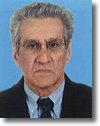
Dr. Anthony C. Bellotti obtained his Associate degree in Plant Protection Technology from Long Island Agricultural and Technical Institute, New York, in 1957. He received his BSc degree in Agricultural Biology from New Mexico State University in 1967 and his PhD in Entomology (Plant Breeding, Plant Pathology) from Cornell University in New York in 1974. From 1957 to 1961 he was a laboratory technician for Baxter Laboratories, New York City. In 1962–1963 he was a US Peace Corps Volunteer in El Salvador, Central America, working with the National Center for Agricultural and Forestry Technology (CENTA, its Spanish acronym). From 1967 to 1970 he was a US Foreign Service Officer assigned to the Peace Corps and Agricultural Extension Service (SEA) in Paraguay, South America. In 1974, Dr. Bellotti joined the International Center for Tropical Agriculture (CIAT) as an Entomologist for the Center’s Cassava and Bean programs.
In 1975, he became a full-time entomologist with the Cassava program and remained at that position until 2006. In 1978–1979 he was outposted as a visiting researcher with the National Cassava and Fruits Research Center (CNPMF, its Portuguese acronym) of the Brazilian Agricultural Research Corporation (EMBRAPA, its Portuguese acronym). From 1979–1980 and 1989–1990, he was Leader of CIAT’s Cassava Research Program, and from 1995–2004 he was Coordinator of CIAT’s Pest and Disease Management Project. Dr. Bellotti participated in several international pest management projects, including biological control of cassava mealybugs and mites in Africa and Asia and the Global Whitefly IPM Project. He was a guest lecturer in tropical entomology at the University of Florida, USA, and an active participant in numerous national and international congresses, workshops, and symposiums.
He authored or co-authored over 250 international publications and book chapters, and received numerous national and international awards for research and services rendered for the international agricultural development and research community.
He will be remembered for his enormous professional accomplishments, which advanced the knowledge of cassava entomology from its infancy to maturity, opening the way for major contributions to improved livelihoods for cassava farmers around the world.