Research Articles Improved bean varieties are taking off – but yields aren’t. Why?

Farmer uptake of improved bean varieties should not be the endpoint indicator of success. Low yield improvements in 3 countries, despite significant sowing of improved varieties, point to the need for improved management for farmers to reap benefits
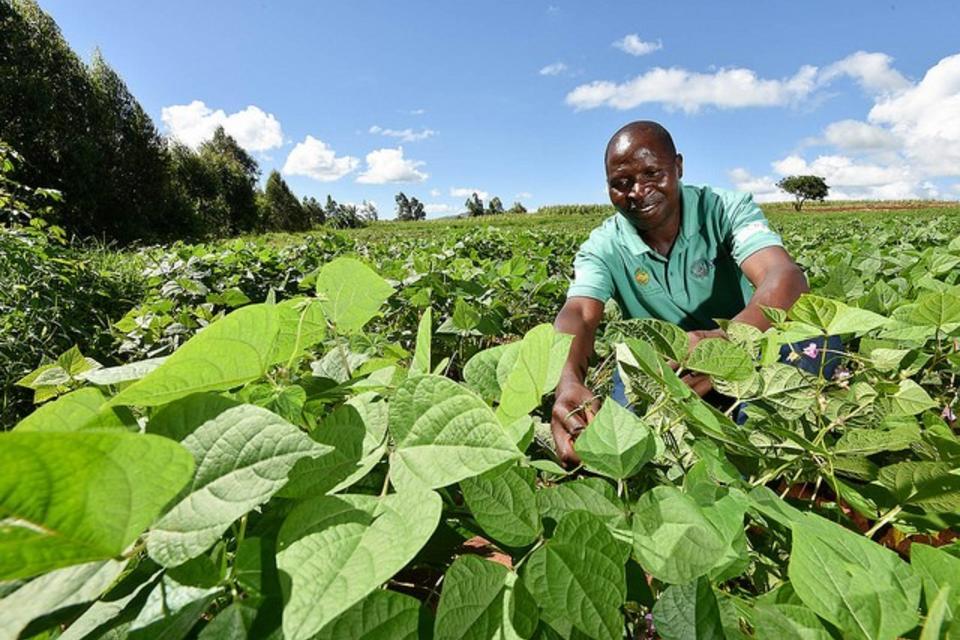
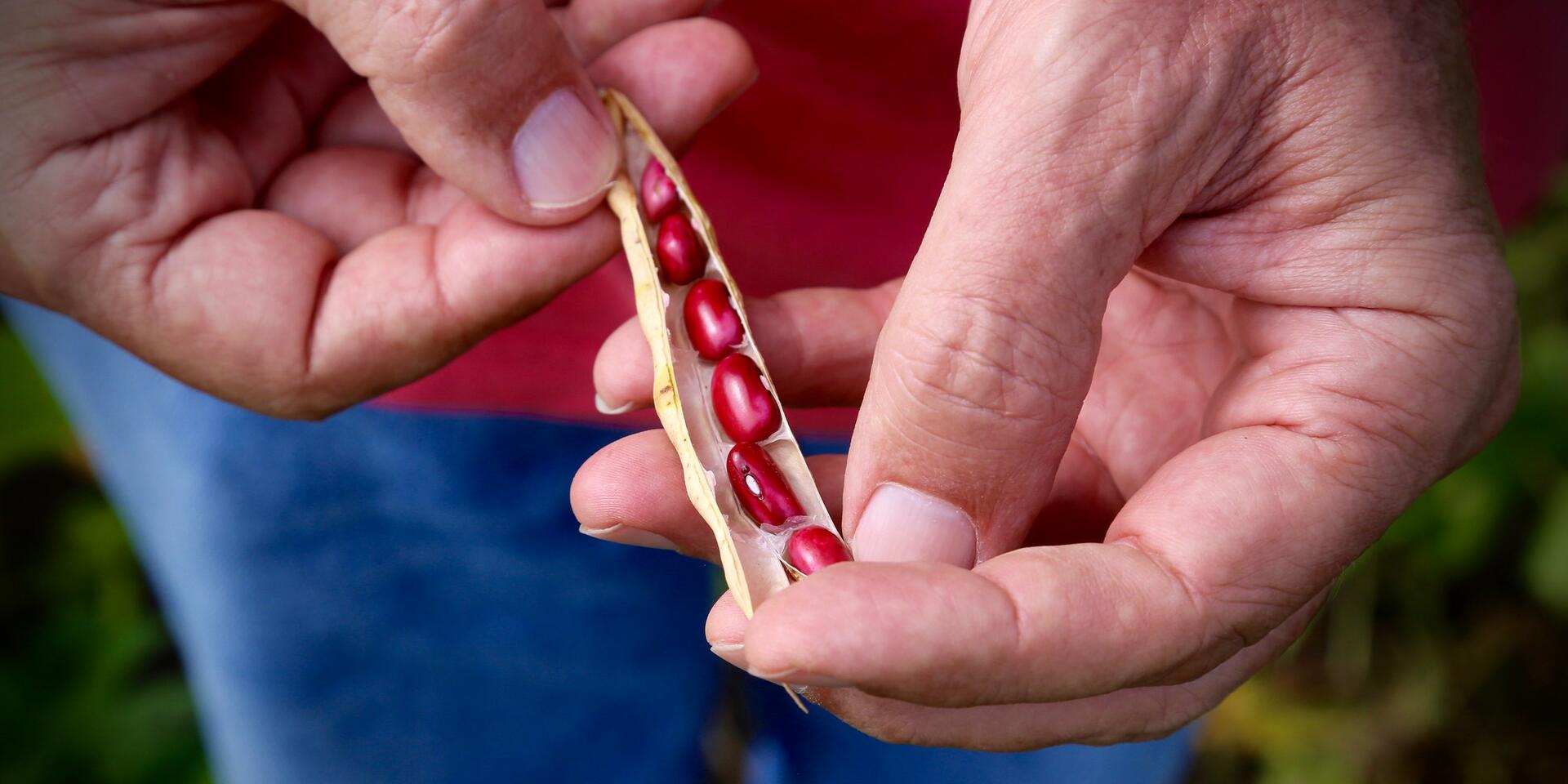
Improved bean varieties can increase production, withstand the vagaries of climate change, improve nutrition, and keep pests at bay. Also called modern varieties, or MVs, these beans can keep farmers in business and people well-fed. But a new study shows that despite significant uptake of MVs in four countries, increased production was only found in one.
The findings show that widespread planting of improved beans should not be the final indicator of success for MVs. Continued management and monitoring of seed quality, among other targeted activities, is required for the beneficial traits of better beans to be reaped from farmers’ fields.
Researchers at the Alliance of Bioversity International and CIAT and Michigan State University found that, despite strong genetic use of improved bean varieties, in Haiti (77% of beans were MVs), Guatemala (35-40%), and Honduras (26%), yields were largely unchanged, compared to non-improved varieties.
Nicaragua was the only outlier – and it had very low adoption of MVs. Only 10% of the Central American country’s beans were MVs, but yield increased up to 33% where they were planted.
Beans across these countries – and many more in Latin America and Africa – are a critical staple for food and nutritional security.
Older MVs may have lost some of their traits over time due to a lack of consistent post-release management. But new MVs are regularly developed and released to respond to changing agroclimatic conditions, new pests and diseases, and to increase nutritional value and productivity. But regardless of release date, desired traits tied to genetic quality should persist under adequate management conditions.
“These results underscore the inconsistent yield gains associated with improved varieties and highlight the complex relationship between MV adoption and yield performance, shaped by factors such as seed quality, agroclimatic conditions, and the structure of seed distribution systems in these countries,” the researchers wrote.
Their findings were published in the journal Agricultural Systems. The researchers used data from DNA fingerprinting, surveys of over 1,200 farmers, interviews with experts, and on-farm trials to reach their conclusions.
Because methodologies varied in some countries, comparisons should be made carefully. Yet scientists reached several broad conclusions that point to the need for stronger seed systems – the management of seeds between seed multipliers, distributors and farmers – to maintain their quality.
One concerning finding from the DNA fingerprinting included “contamination,” meaning improved seeds had often been mixed with non-improved varieties. The research also found that some seeds lacked expected disease-resistance genes, which may contribute to lack of yield gains found in Guatemala and Honduras.
The Alliance’s Byron Reyes and Michigan State University’s Mywish Maredia, the study’s lead authors, wrote that the findings underscore “the need to move beyond adoption as a success metric.
“Instead, seed system performance should be judged by whether improved varieties, once adopted or widely used, deliver meaningful gains for farmers. Only by integrating breeding, seed delivery, farmer support, and monitoring systems can investments translate into resilient, farmer-centered outcomes,” they said.
Pathways to improvement
Nicaragua’s relative success points to stronger formal and informal seed systems, pipelines for the release of MVs, public distribution and community seed banks. However, the discrepancy between the system’s supply and farmer demand needs to be addressed.
Other recommendations from the authors include:
1. Genetic Integrity: Targeted investment in varietal maintenance and genetic purification is crucial to prevent contamination and preserve the performance potential of improved varieties.
2. Quality Assurance: Strengthening seed quality control mechanisms throughout the entire seed value chain, especially in public and donor-supported distribution programs.
3. Farmer-Centric Breeding: Aligning breeding pipelines with farmer needs and local agroecological realities to ensure that developed varieties are truly suitable and beneficial – one possible reason seeds underperform is that they are not adapted to environments where they are being grown.
4. Real-World Monitoring: Continuously monitoring varietal performance under actual farmer conditions, rather than just controlled trials, to capture the impact of management variability and resource constraints.
5. Broader Metrics: Future research should expand beyond adoption rates to include economic, nutritional, and social outcomes, and explore factors like landscape heterogeneity and connectivity to better understand farmer decision-making and seed system dynamics.
“These priorities do not preclude other public investments in agriculture, they represent foundational elements for ensuring that varietal research and seed distribution efforts translate into tangible on-farm gains,” the researchers concluded. “Only by integrating breeding, seed delivery, farmer support, and monitoring systems can investments translate into resilient, farmer-centered outcomes.”