
Sub-national/regional level launching workshop on Omo-Ghibe Living Landscapes of the Multifunctional Landscapes Science Program (MFL SP) in Ethiopia
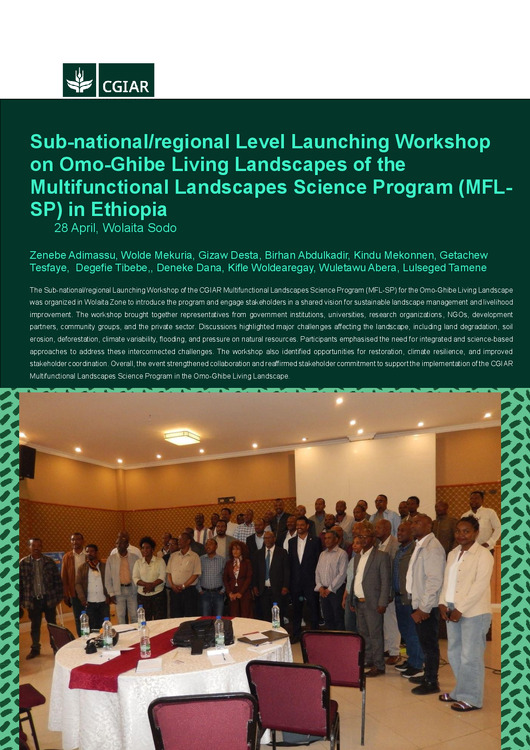
The Sub-regional Launching Workshop of the CGIAR Multifunctional Landscapes Science Program (MFL-SP) for the Omo-Ghibe Living Landscape was organized in Wolaita Zone to officially introduce the program and engage key stakeholders in a shared vision for sustainable landscape management and livelihood improvement. The workshop brought together representatives from government institutions, universities, research organizations, development partners, NGOs, community representatives, and the private sector to discuss the major environmental, socio-economic, and governance challenges affecting the Omo-Ghibe basin and identify opportunities for integrated landscape restoration and development. The Omo-Ghibe Living Landscape is a strategically important and ecologically diverse area that supports agriculture, pastoralism, fisheries, hydropower generation, and biodiversity conservation. However, the landscape is increasingly threatened by land degradation, soil erosion, deforestation, declining soil fertility, landslides, climate variability, flooding, and growing pressure on natural resources driven by rapid population growth and unsustainable land-use practices. These challenges have negatively affected agricultural productivity, ecosystem services, and community livelihoods.
The workshop emphasized the importance of adopting integrated, science-based, and multi-stakeholder approaches to address these interconnected challenges. The CGIAR Multifunctional Landscapes Science Program was presented as a platform to promote resilient, productive, and inclusive landscapes through coordinated interventions that balance environmental sustainability, livelihood improvement, and economic development. The event also created an opportunity to review past and ongoing restoration efforts, identify priority interventions for target districts, strengthen stakeholder coordination, and align ongoing initiatives under a common landscape management framework.
Through keynote speeches, technical presentations, and breakout group discussions, participants highlighted both the critical challenges and the strong opportunities for sustainable transformation in the Omo-Ghibe landscape. The workshop concluded with a shared commitment among stakeholders to strengthen collaboration, enhance evidence-based planning, and support the successful implementation of the MFL-SP in the region.