
Solutions for digital inclusion and digital innovations for inclusion by 2050
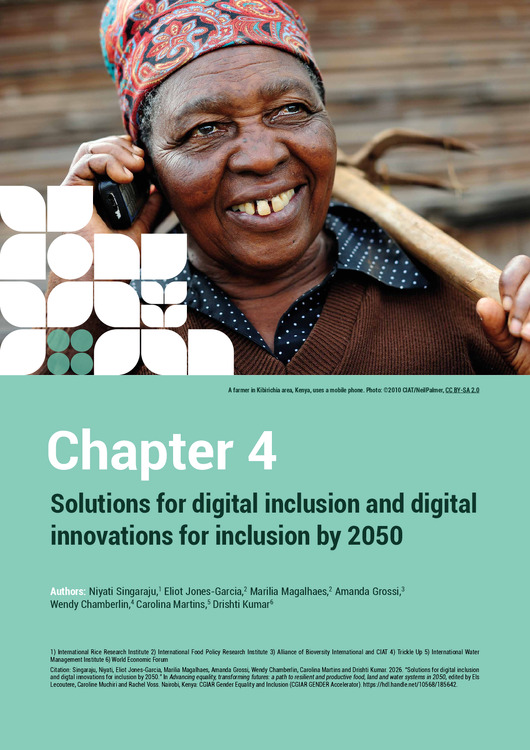
Food, land and water systems (FLWS) are transforming unevenly: off-farm work is expanding, youth employment in agriculture is falling in most regions, and women’s participation and earnings remain shaped by persistent regional gaps. Digital technologies will increasingly mediate information, finance, markets, advisory services and governance in these changing systems. Inclusive digital systems could lift approximately 30 million women out of extreme poverty and add around US$1.5 trillion to the global economy by 2050, but these gains depend on who can access, control, trust and shape digital systems. In South Asia and sub-Saharan Africa, mobile-ownership and internet-use gaps remain slow to close.
This chapter asks which digital inclusion strategies can support gender and intersectional equality in FLWS by 2050, and under what conditions. It draws on chapter 1 projections to frame future priorities, while recognizing that comparable longterm, gender-disaggregated digital agriculture projections remain limited. This chapter is situated within the report’s wider framing of the polycrisis, set out in the introduction along with the report’s conceptual framing. This chapter focuses specifically on how digitalization may either reinforce exclusion or expand agency in future FLWS.