
Protocol for selecting participants for advocacy, leadership and couple learning
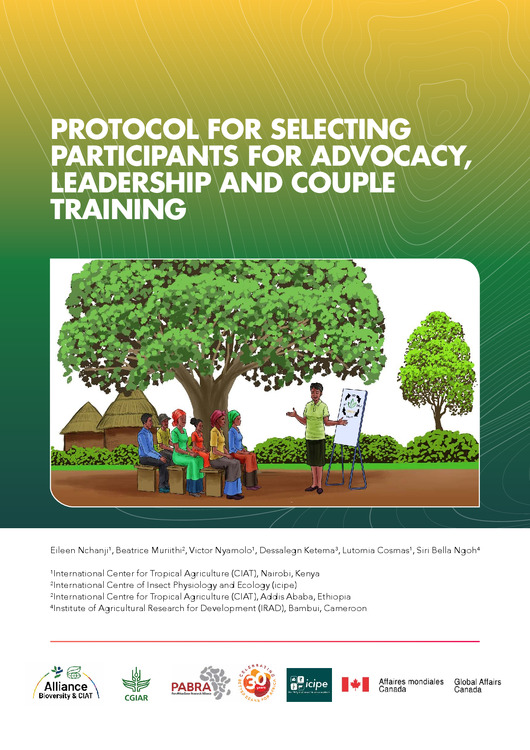
This protocol serves as a comprehensive framework for identifying and selecting participants for three specialised training streams: Advocacy, Couple Collaboration, and Leadership. The primary objective is to move beyond broad representation toward a strategic selection of individuals and households best positioned to translate learning into collective action, climate resilience, and sustain community change. By prioritising influence, commitment, and “multiplier effects,” the protocol ensures that training outcomes extend beyond the individual to the wider community and institutional levels. Targeting individuals capable of influencing policy, markets, and governance within agrifood systems, the advocacy stream focuses on women, youth, and entrepreneurs in SMEs or cooperatives who already exercise formal or informal influence. Essential criteria include demonstrated leadership as a spokesperson or mobilizer, active engagement in governance or market spaces, and a 3–6 month commitment to post-training advocacy tracking. The inclusion strategy explicitly avoids “elite capture” by seeking diverse socio-economic backgrounds and ensuring safe participation for those at risk of social backlash. Designed to improve spousal collaboration, joint decision-making, and agricultural productivity among smallholder farming households, this stream focuses on married couples actively managing shared agricultural or enterprise assets in rural/peri-urban areas. Selection requires voluntary, non-coerced participation of both spouses, a joint commitment to a two-day intensive session, and the capacity for experiential learning through role-play and drawing. To maintain equity, a literacy-neutral approach is used, utilising visual tools like the Daily Activity Clock and Decision Wheel to ensure equal participation regardless of education level. The leadership stream empowers women, youth, and men to lead climate resilience initiatives and community based organisations. The profile targets current or potential leaders, particularly within cooperatives facing upcoming elections or organisations focused on climate adaptation. Participants must possess basic communication skills, a willingness to support others as “change agents,” and the drive to develop a personal leadership action plan. Priority is given to those demonstrating “style flexibility” and a willingness to use “Tree of Life” reflections for mentorship. Inclusion efforts focus on “voice representation” to ensure those with high potential but significant social barriers are included, valuing life wisdom over formal education. Implementation requires balanced cohorts of 30-40 participants, validated with local partners and documented for accountability. Ethical safeguards dictate that all participation must be based on informed consent, with facilitators tasked with managing power dynamics and ensuring venues are accessible to persons with disabilities. To ensure sustainability, selection prioritises those linked to existing networks, such as farmer groups or women’s associations, providing a built-in support structure for ongoing peer accountability