
Promotion of validated Integrated Crop Management (ICM) practices for increased and sustainable bean production in Rwanda and Burundi
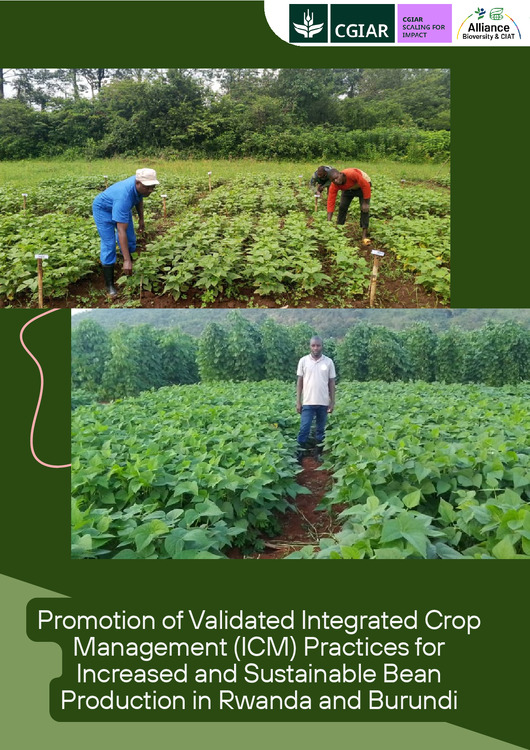
Under the Scaling for Impact framework, validated Integrated Crop Management (ICM) practices are being promoted in Rwanda and Burundi to enhance sustainable bean productivity, soil health, and farmer resilience. Implemented in close collaboration with national agricultural research institutions, private- and public-sector agro-input providers, and bean value chain actors, the initiative generates context-specific scientific evidence to support the adoption and scaling of organic and bio-based technologies.
Across both countries, field trials and demonstrations conducted during the September 2025 cropping season evaluated combinations of seed dressing, organic and biofertilizer application (including rhizobia inoculants, farmyard manure, frass, and locally blended fertilizers), optimized planting densities by seed size, and recommended agronomic practices. In Burundi, the trials additionally assessed the use of natural biopesticides derived from neem and Tithonia diversifolia for bean disease management. The activities were implemented under both on-station and on-farm conditions across diverse agro-ecological zones—two districts in Rwanda and ten districts in Burundi.
Preliminary observations indicate that integrated soil fertility management—particularly the combination of organic and mineral inputs and the use of seed dressing—consistently improves plant vigor, pod development, and overall crop performance compared to unfertilized or single-input treatments. Medium- and large-seeded bean varieties showed superior reproductive performance, while plots receiving biofertilizers demonstrated greater tolerance to rainfall variability and moisture stress. These results highlight the importance of balanced fertility management and context-appropriate agronomic practices in strengthening resilience to climate-related shocks.
Overall, the Rwanda and Burundi experiences provide complementary evidence that biofertilizers, organic inputs, and integrated crop management practices are viable, scalable solutions for improving bean productivity, sustaining soil fertility, and enhancing the resilience of smallholder farming systems. The findings reinforce the value of partnerships between research institutions, private-sector input suppliers, and farmers in accelerating the adoption of climate-smart and sustainable agricultural technologies across the region.