
Pastoral Climate Advisory for Ethiopia: Enhancing adaptation of mixed crop-livestock production systems in Lowlands of Ethiopia MAR-MAY Season (MAM 2026)
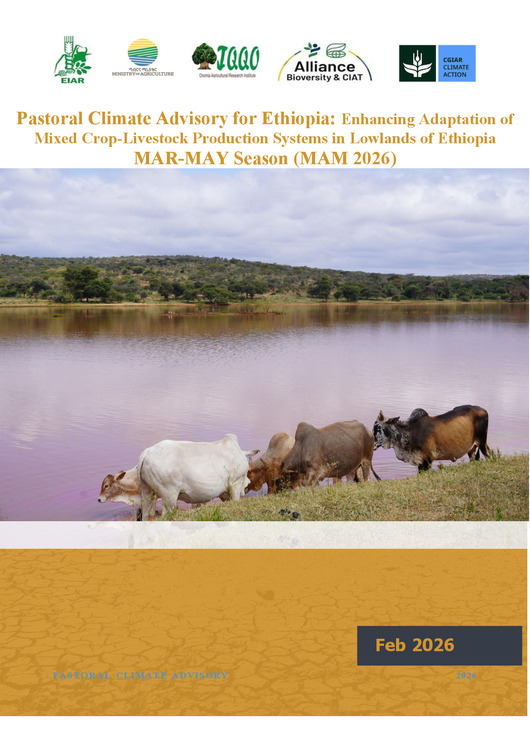
The March–May (MAM) 2026 Pastoral Climate Advisory provides climate-informed guidance to support pastoral and agro-pastoral communities in Ethiopia’s lowland regions in managing livestock, rangelands, and crop production. The outlook considers the carryover impacts of the weak SON 2025 rains, which left many areas with depleted pasture and stressed water resources.
For the MAM 2026 season, near-normal to slightly above-normal rainfall is expected across most pastoral areas, offering opportunities for gradual recovery of pasture and water availability. However, rainfall distribution may be uneven, with localized dry conditions possible in parts of Afar, Borana, and eastern pastoral zones later in the season. Rangeland’s conditions are projected to improve progressively, although some pockets may continue to face limited pasture. At the same time, mild to moderate livestock heat stress is anticipated, which may increase disease risks and affect livestock productivity. Pastoral communities are therefore encouraged to strengthen livestock health management, conserve water and pasture resources, and implement controlled grazing practices.
For agropastoral areas, the outlook indicates average to good crop production potential, particularly for drought-tolerant crops such as sorghum, provided planting occurs after effective rainfall onset and climate-smart soil and water management practices are applied. The advisory also highlights the importance of climate-informed peace and security measures, encouraging coordinated livestock mobility, cross-border cooperation, and community dialogue to reduce potential resource-based conflicts
Overall, the MAM 2026 season presents an opportunity for recovery and improved livestock productivity, but success will depend on proactive resource management, climate-informed planning, and strengthened coordination among communities and stakeholders. Continuous monitoring of seasonal updates is essential to support timely decision-making throughout the season.