
Mixed-methods gender analysis country report, Mozambique: Building equitable climate resilient African bean and insect sectors
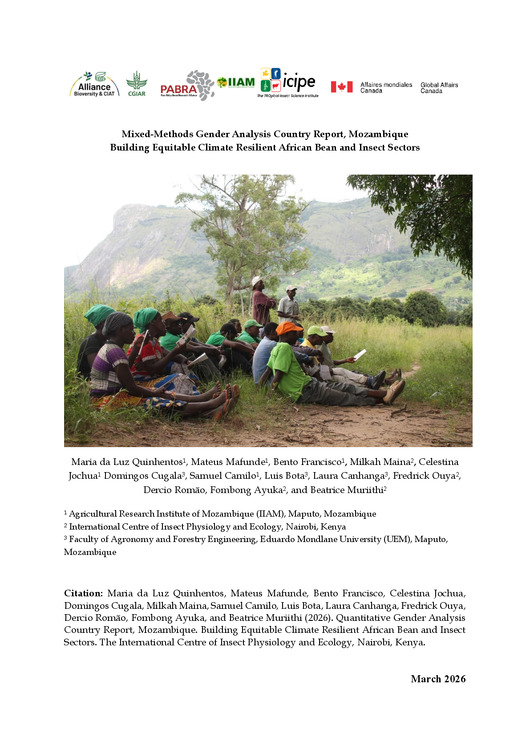
This is a quantitative gender analysis of the Building Equitable Climate Resilient Africa Bean & Insect (BRAINS) project in Mozambique. The project focuses on enhancing equitable climate resilience to improve food and nutrition security in Sub-Saharan Africa (SSA) among female, male, and youth farmers and entrepreneurs across the common bean, insect, and fruit tree value chains. The analysis collected data from 137 household farmers, comprising 59 women and 78 men, and from 101 farmers (46 men, 55 women) who participated in the focus group discussions across the common bean, insect for food and feed, and fruit tree value chains in Mozambique. In line with the study objectives, the data were disaggregated by gender, and the results were presented as tables and graphs.
The findings show gender disparities in land ownership, agricultural production, and outputs. Male farmers consistently hold larger land areas and cultivate more land than female farmers, resulting in higher yields of beans and fruits. Male also have greater access to resources such as modern beehives and receive higher market prices for their produce. Female farmers, while actively producing crops like beans, have smaller landholdings, fewer trees, and mainly rely on traditional technologies, which limit their productivity and income. Pest and disease-related losses contribute to yield gaps in mango production, disproportionately affecting women due to limited resources. The findings highlight the potential for gender-responsive interventions, including increased access to quality inputs and planting materials, climate-smart training, strengthened market linkages, post-harvest infrastructure, and targeted financial and entrepreneurship support for women and youth.
Climate change events, including droughts, cyclones, rainfall pattern changes, rising temperatures, excessive rains, and pests and diseases occurrence, were indicated by farmers as events that are significantly affecting the production and productivity of common bean, fruit trees, and insects, thus negatively influencing the livelihood of men and women in the three districts. The persistent gender inequalities in access to productive resources, decision-making, and participation in agricultural value chains significantly influence women’s abilities to adapt to climate change. Despite these challenges, women play crucial roles in bean farming, insect harvesting, and fruit processing, offering strategic entry points for inclusive, climate-resilient interventions.