
LEADERSHIP TRAINING IN MUREHWA, ZIMBABWE. Building Gender Equitable Resilience for Adaptation to Climate Across Bean Crop and Insect Corridors (BRAINS)
Women in rural and agricultural communities are essential architects of resilient food systems, yet structural and
cultural barriers frequently limit their participation in formal decision-making spaces. To achieve genuine climate
resilience and systemic community transformation, it is critical to move beyond viewing women as passive
beneficiaries of development. Instead, interventions must intentionally equip them to serve as active, empowered
leaders capable of driving localised solutions.
This report details the implementation and outcomes of a recent capacity-building workshop anchored by the
Leadership Training Tool. The primary objective of this initiative was to strengthen the leadership capacity of
women, youths and community champions, enabling them to effectively influence local governance, advocate for
inclusive resource allocation, and spearhead sustainable agricultural practices within their networks.
Designed to be highly inclusive and adaptable, the training methodology deliberately moved away from
traditional, lecture-based instruction. Grounded in adult learning principles, the sessions utilised an experiential,
learner-centred approach that drew heavily on the participants’ own lived experiences. By employing interactive
role-playing, literacy-neutral visual tools, and collaborative problem-solving, the workshop fostered a strong
environment of peer-to-peer learning and mutual support.
Ultimately, the training sought to bridge the gap between theoretical leadership concepts and practical
application. This report captures the key insights from the sessions, the transformative shifts observed in the
participants’ confidence and strategic thinking, and the forward-looking action plans they developed to sustain
their impact and foster long-term resilience at the grassroots level.
The Leadership Training conducted in Murehwa District aimed to strengthen community members’ leadership
capacity, with a deliberate focus on women and youth, who are often underrepresented in decision-making
spaces. The training was designed not only to build individual confidence and skills but also to challenge and
transform existing social and structural systems that limit inclusive leadership. The programme emphasised that
leadership is not defined by formal titles, but by everyday actions, values, and the ability to inspire change within
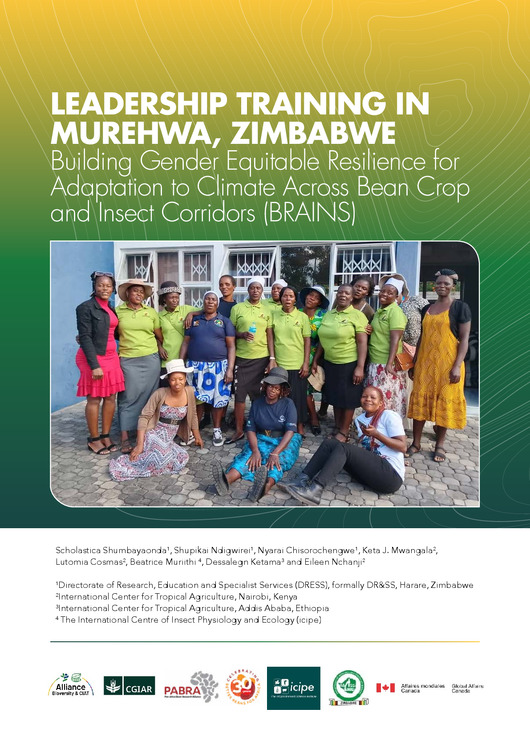
communities. We trained 28 participants, of whom 1 was a man, 2 were young men, 20 were women, and 5 were
young women.