
Gender scan and scoping study report of selected SMEs in Tanzania
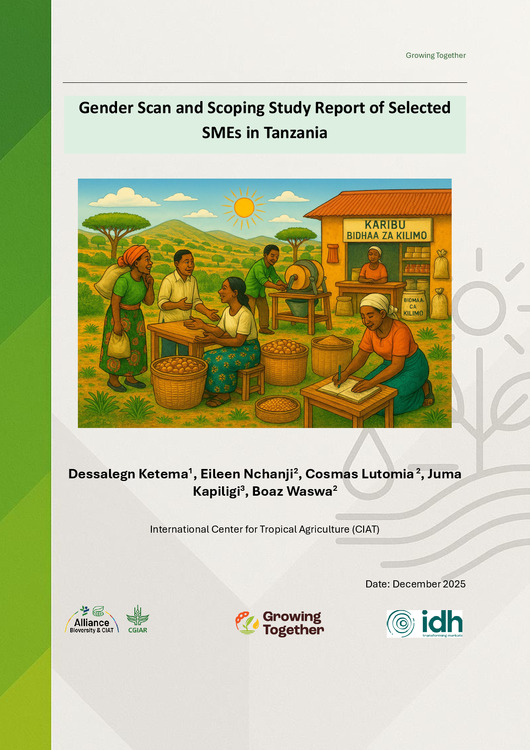
This report presents a comprehensive gender scan of selected small and medium enterprises (SMEs) across the rice, maize, sunflower, soybean, and common bean value chains in Tanzania, under the Growing Together Project. Funded by NORAD through IDH, the project aims to strengthen inclusive, climate-smart, and market-oriented agri-food systems. The gender scan aligns with NORAD’s priorities on gender equality, women’s economic empowerment, and inclusive growth, as well as IDH’s focus on resilient value chains, responsible sourcing, and competitive SMEs. The assessment covered five SMEs-GMT Super Rice Company, Khebandzha Marketing Company (KMC), AKM Glitters, Ruaha Milling Company, and Stegrafet Private Company Limited. Using a gender-responsive and business-oriented lens, the scan examined workforce composition, leadership and decision-making, supplier inclusion, access to finance, business services, institutional practices, and readiness for gender integration. Findings reveal that while women and youth contribute substantially as workers and farmers, they remain structurally constrained from leadership roles, stable employment, and meaningful participation as suppliers. Men dominate management positions and supplier bases across most SMEs. These gaps are driven by limited access to land and finance, lack of formal gender strategies and policies, reliance on informal practices, and training and extension models that unintentionally favor men. From a business perspective, these gender gaps undermine productivity gains, supply reliability, farmer upgrading, and long-term resilience. At the same time, the SMEs demonstrate strong potential for gender-responsive transformation. Existing Training of Trainers (ToT) systems, demo plots, aggregation centers, digital farmer databases, and openness to capacity building provide concrete entry points for integrating gender equality into core business operations. Several SMEs have expressed readiness to co-design gender guides, appoint gender focal persons, and revise training and sourcing practices. The report concludes that embedding gender equality into SME systems is not only a social imperative but also a strategic business investment. It outlines a clear way forward that links gender-responsive actions to improved SME performance, stronger value chains, and alignment with NORAD and IDH objectives.