
Ethiopian gender strategy. Building Equitable Climate-Resilient African Bean & Insect Sectors (BRAINS)
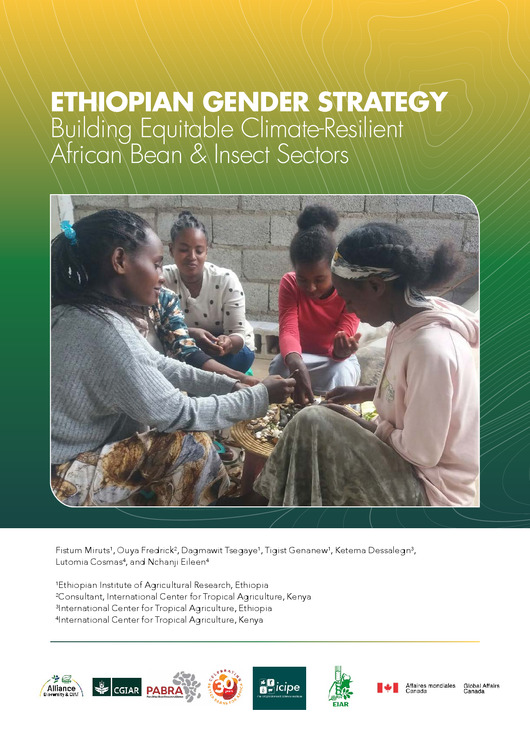
The Building Equitable Climate-Resilient African Bean and Insect Sectors (BRAINS) project is facilitating sustainable
agricultural change throughout Sub-Saharan Africa, particularly in Ethiopia. The project seeks to enhance low
carbon, climate-resilient production systems and broaden inclusive livelihood options for rural communities. The
initiative in Ethiopia targets the common bean, fruit trees, and insects for food and feed value chains, which
possess significant potential to improve food and nutrition security, diversify revenue sources, and strengthen
resilience among smallholder farmers amid escalating climate variability. The BRAINS project is fundamentally
dedicated to gender equality and social inclusion, ensuring that women, men, and youth are actively involved,
receive equitable benefits from interventions, and are enabled to engage in decision-making and value-chain
governance.
Ethiopia, like to numerous countries in Sub-Saharan Africa (SSA), is facing the compounded challenges of
climate change, environmental degradation, and socio-economic disparities that disproportionately impact
rural communities reliant on rain-fed agriculture. Erratic rainfall, recurrent droughts, and land degradation
continue to undermine agricultural productivity and household wellbeing (Belay et al., 2017; Njeru et al., 2016).
Women constitute a substantial portion of the agricultural workforce and are integral to food production,
household supply, and natural resource management. However, their productivity, ability to adapt, and ability
to make decisions are restricted by enduring gender disparities that are associated with unequal access to land,
agricultural inputs, finance, extension services, technology, markets, and leadership possibilities (World Bank,
2019; Abdisa et al., 2024; Tesafa et al., 2025). These inequities are compounded by socio-cultural norms, time
demands, and institutional impediments that restrict women’s agency within households, cooperatives, and
community structures (Bayeh, 2016; Mulema & Damtew, 2016).
Evidence from national and regional research suggests that reducing gender disparities in agriculture not only
increases production and family food security but also strengthens climate resilience and inter-generational
welfare. Yet, women and youth, particularly those in marginalised and resource-poor rural areas, remain under
represented in high-value value-chain activities, entrepreneurial opportunities, and climate-smart agricultural
innovations. Addressing these inequalities needs gender-responsive programming, institutional reform, and
transformative techniques that challenge restrictive conventions while promoting inclusive participation and
benefit sharing throughout agricultural systems.
The BRAINS gender strategy for Ethiopia responds to these problems by embracing gender equality as a basic
pillar of agricultural development. The strategy is grounded in the Reach, Benefit, Empower, and Transform (RBET)
framework, the gender transformative socio-technical innovation bundles (GTSTIBs) approach and the youth
and women quality centre (YWQC) model which advocate systematic pathways from inclusive participation to
equitable benefits, improved agency, and structural change in social norms and institutional practices. Within the
Ethiopian context, the strategy uses these approaches to increase men, women, youth, and other marginalized
groups involvement across the bean, fruit tree, and insect for food and feed value chains, while fostering climate
resilient, equitable, and sustainable livelihoods.