
Enhancing women’s rights and lives through gender-equitable restoration
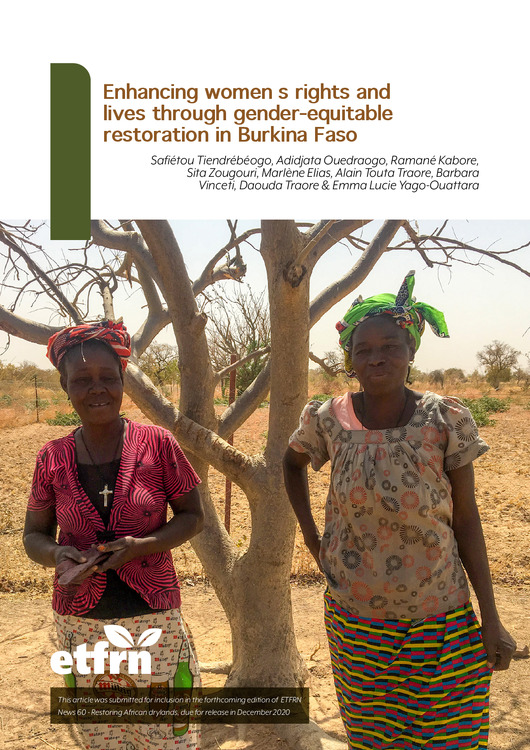
Gender differences and gender inequalities in rights, status and responsibilities significantly shape daily rural life and life cycles in rural West Africa (Levasseur 2003), where women face significant constraints in participating in activities aimed at restoring forests and farmland. Yet, they also find innovative ways to overcome such constraints, such as collective action and the creation of mutual support groups. In Burkina Faso, rural women are mobilizing such groups to improve their living conditions through sustainable resource management, and many NGOs, projects and associations are supporting them in these endeavours. By organizing themselves into collectives that can be targeted by development institutions, women improve their access to technical, financial and material support and training, build their capacities, and acquire new knowledge and resources to actively participate in land restoration.
In Burkina Faso and elsewhere in West Africa, women's limited access to and control over land severely hinders their ability to engage in restoration activities. Limited rights to land are a result not only of formal policies, but also of customary rules, which vary according to ethnicity, village, social status and the position of women in polygamous families (Konate 2006). Unequal ownership of assets such as equipment, fertilizers, tools and improved seeds — coupled with longstanding disparities between men and women in access to formal education, information, and agricultural extension — also has negative impacts on women farmers' ability to adopt innovative restorative practices (Njobe and Kaaria 2015).
This article specifically addresses three questions: What motivates women to invest time and effort in the restoration of land and forests? What obstacles do women face in implementing land and forest restoration activities? How do restoration activities affect the living conditions of women