
Differential agronomic trait responses of inbred and hybrid rice cultivars to rice–forage rotations
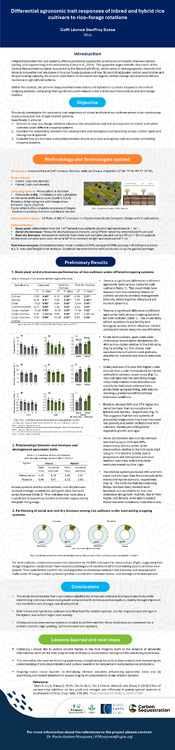
Integrating rotation into rice systems offers a promising opportunity to enhance soil health, improve nutrient cycling, and support long-term productivity (Chen at al., 2018). This approach aligns with the objectives of the Carbon Sequestration project, supported by the Bezos Earth Fund, which seeks to leverage genetic diversity and develop innovative root ideotypes in tropical forage grasses and rice. By promoting greater carbon assimilation and deeper rooting capacity, the project contributes to increased soil organic carbon storage and improved climate resilience in agricultural systems. Within this context, the present study examines how inbred and hybrid rice cultivars respond to diversified cropping systems, comparing their agronomic performance under continuous monoculture and rice–forage rotation.