
Cultivating inclusion: Stegrafet’s private company limited emerging success in women and youth empowerment
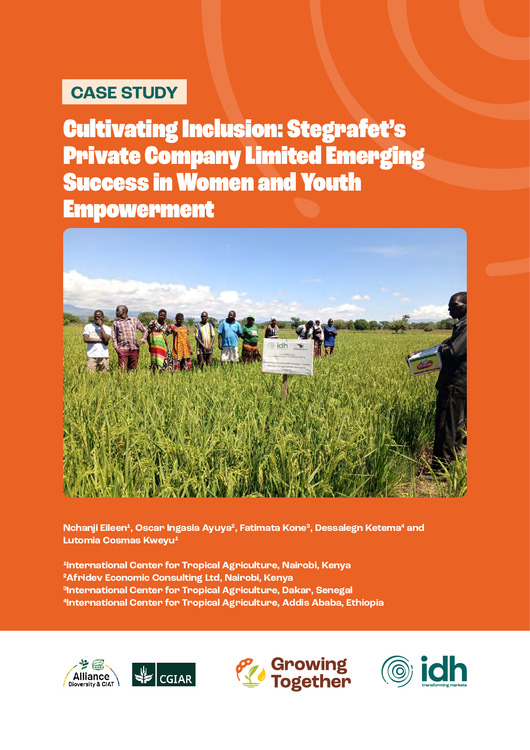
Women and youth are central actors in Tanzania’s rice value chain, contributing signif
icantly to production, aggregation, logistics, quality management, and trade. However,
they often face persistent barriers that limit their ability to fully participate in and benefit
from commercial agricultural opportunities. These constraints include limited access to
productive resources and finance, unequal participation in decision-making, restrictive
social norms, heavy domestic workloads, limited access to market information and
business networks, and challenges in securing quality employment and entrepreneurial
opportunities. Addressing these barriers is essential not only for social inclusion but also
for improving the efficiency, competitiveness, and sustainability of agribusinesses.
This case study examines how Stegrafet Private Company Limited, a rice aggregation and
marketing enterprise in Tanzania, has leveraged gender and youth inclusion as a strategic
business approach. Supported by the Growing Together Programme, led by IDH and
funded by Norad, and implemented in partnership with CIAT, Rikolto and EAGC, Stegrafet
participated in a gender analysis and an inclusive business model assessment that helped
the company transition from the passive participation of women and youth to a deliberate
and institutionalised inclusion strategy. The study draws on gender assessments, business
model analyses, key informant interviews, testimonies from women and youth suppliers,
and programme monitoring data to explore the relationship between inclusion, business
performance, and socio-economic transformation.
Findings reveal that Stegrafet has developed a compelling business case for inclusion.
Operating within a highly competitive, low-margin environment, the company depends
heavily on maintaining product quality and minimising operational risks. Women have
become critical to these objectives through their strong performance in quality control,
supplier management, and financial accountability. Their attention to quality standards
reduces losses associated with substandard produce, while their stewardship of substantial
financial transactions has strengthened trust and accountability across the supply chain.
These contributions have demonstrated that gender inclusion can directly improve opera
tional efficiency, reduce business risks, and enhance supply chain reliability.
The study also highlights the complementary roles of women and youth within the
company’s operations. While women provide quality assurance, coordination, and financial
management, youth contribute mobility, physical labor, transportation, and round-the-clock
operational support. This synergy has enabled Stegrafet to maintain efficient, continuous
operations while creating employment opportunities for young people. As women expand
their enterprises, they increasingly employ youth to support logistics and field operations,
creating mutually reinforcing pathways for economic participation and growth.
Beyond business performance, Stegrafet’s inclusion model has generated significant
socio-economic benefits. Women involved in the company’s supplier network have used
their earnings to build homes, invest in their children’s education, expand businesses,
and improve household welfare. Increased economic empowerment has strengthened
women’s decision-making authority and visibility as trusted business leaders within the rice
value chain. In some cases, women’s success has fostered more collaborative household
relationships and encouraged greater family participation in agribusiness activities.
2
A Growing Together case study
Simultaneously, youth have gained employment, practical experience, and new livelihood
opportunities through aggregation, logistics, and transportation services.
The Growing Together Programme played a catalytic role in these achievements by
supporting gender assessments, strengthening business models, generating evidence,
and fostering reflection on the commercial value of inclusion. Importantly, the programme
helped reframe women and youth inclusion from a social responsibility initiative into a
business strategy capable of delivering measurable returns. This shift strengthened
management commitment and provided the foundation for Stegrafet’s Gender Policy and
broader inclusion agenda.
Despite these gains, challenges remain. Women and youth continue to face financial
constraints, limited access to productive assets, infrastructure barriers, and unequal partic
ipation in some higher-value technical and leadership roles. Time burdens associated
with unpaid care work continue to affect women’s participation, while weak gender-
disaggregated monitoring systems limit the company’s ability to fully document progress
and outcomes.
Looking ahead, Stegrafet is well positioned to scale and sustain its achievements through
expanded recruitment and training of women, greater participation of women in strategic
portfolio management, and the integration of inclusive practices into core business
systems. By strengthening partnerships with government agencies, financial institutions,
development organisations, and research partners, the company can further expand
opportunities for women and youth while enhancing the resilience and competitiveness of
Tanzania’s rice value chain.
Overall, this case study demonstrates that gender and youth inclusion are not merely
social objectives but powerful drivers of commercial success, operational excellence, and
transformational development. Stegrafet’s experience provides a practical example of how
inclusive agribusiness models can simultaneously generate business value, strengthen
livelihoods, and contribute to more equitable and resilient agrifood systems.