
Couple Training Report, in Mutasa Zimbabwe
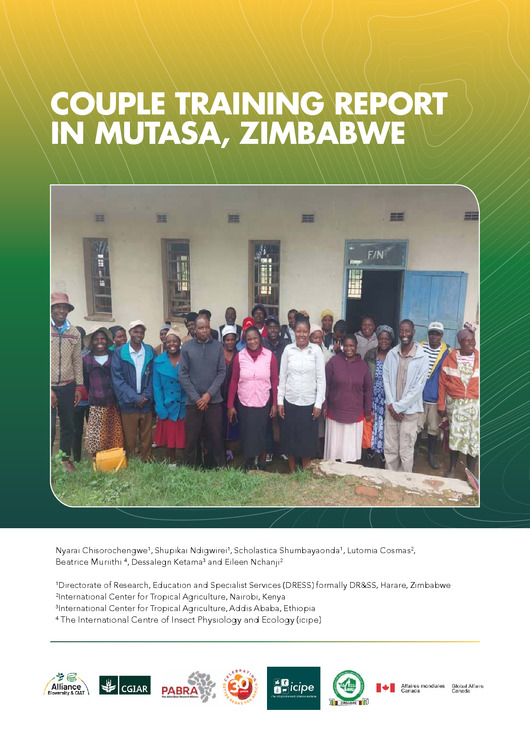
The Directorate of Research, Education and Specialist Services (formerly DRESS) convened a couple training workshop in Mutasa District, Manicaland Province, Zimbabwe. The local economy is driven by semi-commercial agriculture, where villagers cultivate maize, groundnuts, and fruit trees, with irrigated beans serving as a primary cash crop. A sample of twelve couples was selected from four local villages (Mwoyoweshumba, Dombo, Nyabadza B, and Jombe B) to participate in the training. We had 5 male youths, 4 female youths, as well as 7 male adults and 8 female adults. Here we defined youths as below 35 and adults as above 35 years). These couples are expected
to practice the concepts learned and cascade this training to the broader community. The training focused on dismantling gender biases and fostering equitable partnerships through several targeted modules: Interactive exercises revealed that couples struggled with active listening, following instructions, and sustaining conversations without conflict. Participants concluded that differing priorities often lead to misunderstandings, highlighting the critical need for open communication when making household decisions. A gender role exchange activity exposed stark imbalances in household labor. Both men and women agreed that women are overburdened, typically waking up at 4:00 AM and retiring at 9:00 PM, while men have significantly fewer chores
and more relaxation time. There was a consensus on the need to share household responsibilities and formally recognize unpaid domestic labor. The workshop highlighted that men traditionally monopolized household income decisions, which often resulted in the neglect of essential family needs, such as school fees and household utensils. Through the training, couples recognized that making decisions jointly allows them to share in both the successes and failures of their household projects without assigning blame. Initially, couples reported operating on separate land portions and managing individual incomes, with men claiming sole ownership over major assets like tools and livestock. By the end of the module, participants realized that pooling resources and ideas as a couple is essential for improving overall family wellbeing. The training concluded with couples
expressing a strong desire to transition toward joint agricultural and enterprise planning. Participatory visions for their households, including improving food security, educating their children, and upgrading from traditional hand-hoeing to mechanised farming within the next 2 to 5 years. Overall, the training successfully imparted the importance of spousal communication, equitable labor distribution, and shared decision-making. To ensure lasting impact, progress will be monitored for months post-training to evaluate the practical implementation of these concepts