
Complete leadership training guide (Two-Day Full Curriculum)
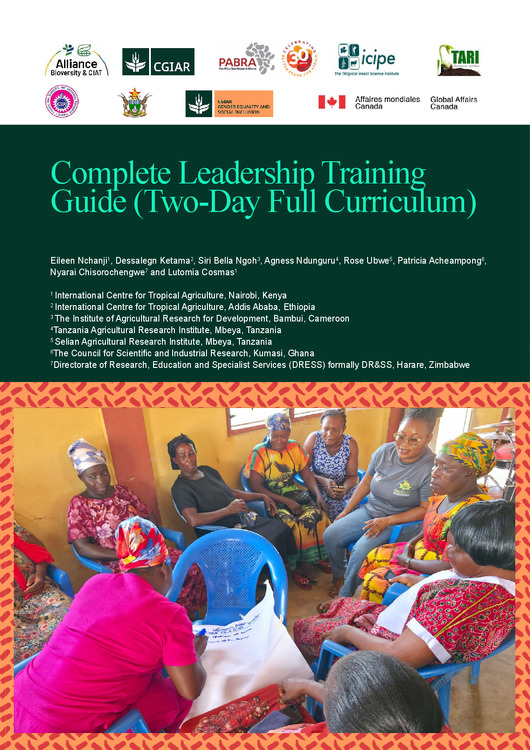
This guide presents a comprehensive, two-day experiential training curriculum designed to redefine leadership, strategic advocacy, and inclusive governance within agricultural communities and cooperatives. The comprehensive package features a complete deep dive into inclusive leadership, extended role-play, and tactical cooperative governance. Tailored for current and aspiring leaders, including women, youth, and men community champions, as well as local decision-makers and opinion leaders, the program equips participants to drive structural shifts in resource allocation and community policy. It is particularly highly relevant for cooperatives undergoing or preparing for leadership transitions.
The fundamental premise of this curriculum is that agricultural and cooperative systems must be intentionally redesigned to structurally support marginalised groups. It explicitly rejects the notion that women and youth must change themselves to fit into traditionally inequitable systems. Instead, the training positions them as active agents of change, equal partners, and vital architects of community and climate resilience.
To ensure total accessibility across all educational backgrounds, the training employs literacy-neutral methodologies. It relies on experiential learning, dynamic visual tools, interactive role-playing, and structured group dialogue to move participants from theory to practical, actionable confidence.
Key Training Pillars
• Self-Discovery & Leadership Identity: Through visual exercises like the "Tree of Life," participants learn to translate everyday survival skills such as household crisis management during a drought into recognized, high-level leadership competencies. The curriculum directly tackles self-doubt and the "imposter" feeling, teaching participants to reframe their lived experiences as essential expertise.
• Dismantling Structural Barriers: The training identifies personal, social, and structural hurdles to leadership. Through powerful physical frameworks like the "Shared Canopy" versus the "Solo Commander," participants visually and mentally internalize that effective leadership requires equal partnership, mutual respect, and the dismantling of the idea that authority belongs to a single gender.
• Strategic Communication & Problem-Solving: Advocates are equipped with the fundamentals of active listening, stakeholder mapping, and public speaking. They practice delivering clear, structured advocacy pitches (Problem, Impact, Solution, Benefits) to confidently negotiate with local decision-makers and stakeholders.
• Transforming Cooperative Governance: Acknowledging that women and youth provide the bulk of agricultural labour but are excluded from the boardroom, the training focuses on actionable pathways to institutional power. Participants strategise practical mechanisms, such as leadership quotas, mentorship pipelines, and localised savings groups, to secure seats in formal decision-making.
The training transcends theoretical discussion by ending with strict accountability. The program culminates in every participant designing a concrete action plan and committing to mentor and coach approximately 45 individuals within their households, cooperatives, or communities, ensuring the rapid and sustainable scaling of inclusive leadership.