
Complete couple training guide (Two-Day Full Curriculum)
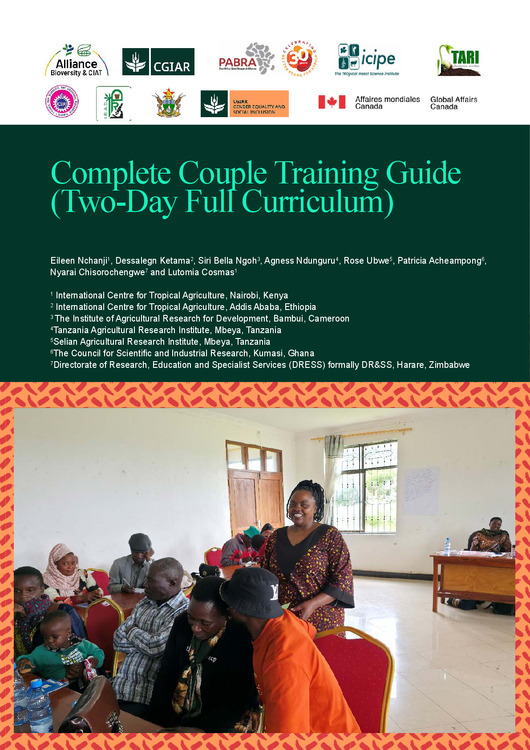
This guide outlines a comprehensive, two-day experiential training program designed to strengthen household partnerships among farming couples. By fostering shared responsibility, improving conflict resolution, and promoting joint engagement, the curriculum aims to drive both agricultural productivity and overall family well-being. The full-scale experience allowing extensive time for deep trust-building, detailed Vision Journeys, and comprehensive equitable resource mapping. The training shifts the paradigm of household dynamics, equipping couples with the tools to communicate effectively, share resources equitably, and plan their agricultural and entrepreneurial futures together. By the end of the training, participating couples will be able to:
• Identify the current division of labor within the home and explicitly recognize invisible or unpaid work.
• Utilise active listening and non-blaming language to facilitate constructive, joint discussions.
• Make equitable, joint decisions regarding key household, farm, and business matters.
• Develop shared "Vision Journeys" and create concrete action plans for agricultural and enterprise activities.
• Establish monitoring tools to track improvements in their partnership and technological adoption over time.
The curriculum is built on highly interactive, experiential learning designed to be literacy-neutral and culturally adaptable. It utilizes visual tools, role-playing, and group dialogue to ensure all participants can engage fully. Key methodologies include interactive icebreakers, peer-to-peer knowledge sharing, and visual mapping exercises.
Program Structure
• Foundations of Trust, Roles, and Decisions: The first day focuses on breaking down communication barriers and building foundational trust. Through active listening games and role-play, couples learn the impacts of effective (and ineffective) communication. The core exercise is the "Daily Activity Clock," where men and women separately map out their 24-hour productive, reproductive, and leisure tasks. This visual side-by-side comparison catalyzes critical dialogue about the gendered division of labor and the recognition of invisible work.
• Resources, Planning, and Commitment: The second day transitions from communication to concrete action and resource management. Couples utilize the "Decision Wheel" to anonymously evaluate who truly holds decision-making power across various household needs, prompting discussions on the benefits of joint leadership. The training culminates in the "Technology Vision Journey," where couples collaboratively draw a strategic roadmap linking their current farm/business status to their future goals, identifying the specific technologies and practices needed to achieve them.
This training is not a standalone event but the catalyst for continuous household transformation. The program concludes with the establishment of a monitoring framework. Project facilitators will use the couples' co-created Vision Journeys as a baseline for follow-up visits, ensuring that subsequent agricultural innovations and support are tailored directly to the couples' articulated needs and collaborative goals.