
Complete advocacy training guide (Two-Day Full Curriculum)
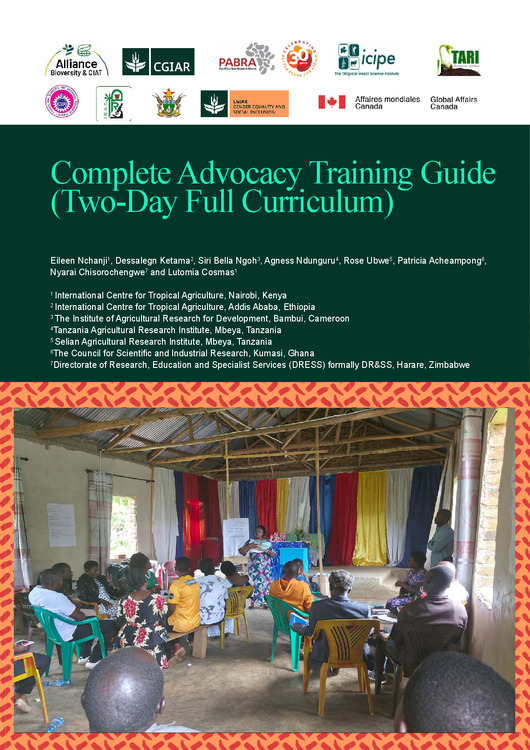
This guide outlines a high-impact advocacy and negotiation training designed to shift gender norms, influence resource allocation, and drive community-level policy change. Tailored for women, youth, local leaders, traditional and religious rulers, and cooperative champions. The complete, immersive package featuring extensive tactical negotiation, in-depth root cause analysis, and mastered public speaking. The curriculum equips participants to move beyond highlighting symptoms and instead target the structural root causes of inequality. The methodology firmly rejects top-down intervention models, positioning women and youth strictly as active agents of change and the primary architects of inclusive agricultural systems.
The training relies on experiential learning, visual tools, role-playing, and group dialogue. This literacy-neutral approach ensures that all participants can effectively engage in complex problem-solving, stakeholder mapping, strategic negotiation, and public speaking.
Key Training Pillars
• Principles of Strategic Advocacy: Participants learn to target institutional power, treat root causes rather than symptoms, and combine hard data with compelling human realities. The core principles Participation, Representation, Equity, and Accountability guide advocates to operate effectively across the community, institutional, policy, and media landscapes.
• Identifying Core Issues & Power Mapping: Through the visual "Issue Tree" exercise, advocates deconstruct their challenges by mapping the trunk (core problem), roots (systemic causes), and leaves (community impacts). This is paired with Power Mapping to identify targets, allies, and opponents, ensuring collective action is directed precisely at those who hold the resources to enact structural reforms.
• SMART Strategy & Tactical Negotiation: Advocacy efforts are formalized using the SMART framework (Specific, Measurable, Achievable, Relevant, Time-bound) to transform broad grievances into concrete, win-win policy demands. Role-playing exercises build practical negotiation skills, teaching participants how to secure resources and navigate competing interests confidently.
• Communication & The Elevator Pitch: Advocates master the art of the elevator pitch by structuring their message with a strong hook, a clear problem statement, supporting evidence, a personal story, and a specific "ask." Peer-reviewed role-play refines their delivery, ensuring they can command attention and negotiate effectively with high-level decision-makers.
• Action Planning: The program concludes with actionable commitments. Advocates set immediate outreach targets to engage their communities and utilize existing networks, establishing a concrete timeline for execution and impact evaluation.