
Comparative biomass yield and regrowth performance of forage grasses
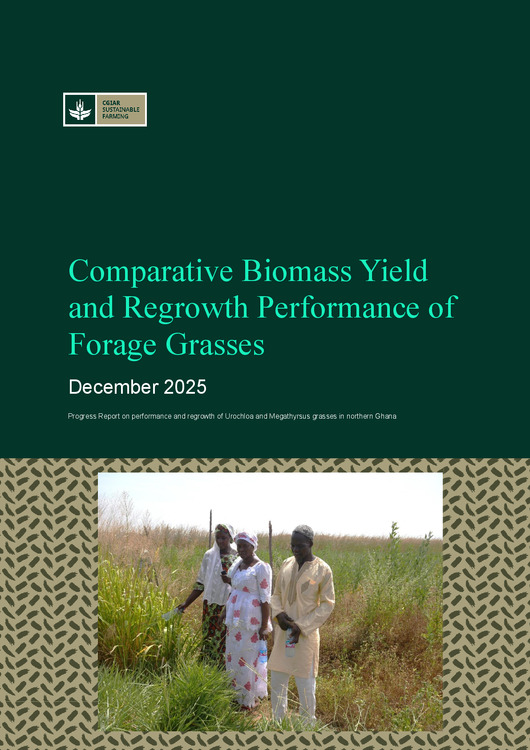
This study evaluated (1) the third-year biomass yield using Napier grass (Cenchrus purpureus) as the reference species and (2) regrowth performance of selected Urochloa (Brachiaria) and Megathyrsus (Panicum) (cultivars and hybrids under semi-arid savanna conditions. Third-year biomass yield and regrowth were assessed across replicated plots to determine relative productivity, persistence, and resilience under repeated cutting. Napier recorded the highest mean yield (15.2 t DM ha⁻¹), while Urochloa hybrids Cobra and Camello and Megathyrsus maximus cv. Mun River showed moderate yields relative to Napier. Regrowth analysis revealed clear differences in persistence between the different cultivars and hybrids, with Megathyrsus maximus cv. Massai and B. Camello exhibiting high persistence, while several Urochloa and Megathyrus cultivars showed low persistence under intensive defoliation. Overall, the findings demonstrate that biomass yield alone is insufficient for forage selection; combining high-yielding species with more persistent and stress-tolerant forages is essential for 2tabilizing feed supply. The study provides robust evidence to guide climate-smart forage diversification, fodder bank development, and dry-season feed strategies in smallholder crop–livestock systems of northern Ghana and similar agro-ecologies.