
Climate-smart characteristics of the Food System Resilience Program (FSRP) agricultural technologies in Burkina Faso
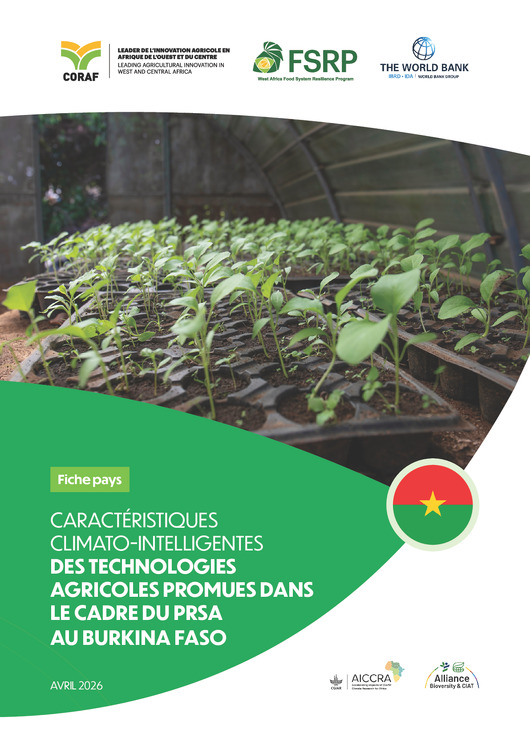
This country brief evaluates the climate-smart characteristics of agricultural technologies promoted under the Food System Resilience Program (FSRP) in Burkina Faso. The objective is to provide scientific evidence on the extent to which the promoted technologies contribute to Climate Smart Agriculture (CSA). The study applied a structured evaluation framework based on 15 criteria aligned with the CSA pillars. The assessment relied on a review of scientific literature, institutional and project documents, and expert knowledge to determine the climate-smart characteristics of each technology. The results identified several best-bet CSA technologies with varied Climate Smart Index (CSI). These include water-efficient irrigation practices such as Alternative Wetting and Drying (AWD) in rice systems, soil and water conservation practices such as zaï pits, the use of improved climate-resilient crop varieties (maize, cowpea, and rice), and integrated soil fertility management practices combining organic amendments and mineral fertilizers. Overall, the findings highlight that a combination of improved climate-resilient varieties and sustainable land and water management practices offers the strongest potential to increase resilience in agricultural systems in Burkina Faso. These evidence-based insights are to guide farmers, technicians, extensionists, policymakers, development partners, and research institutions in prioritizing and scaling CSA technologies that strengthen climate resilience and sustainable production in Burkina Faso.