
Building Equitable Climate-resilient African Bean & Insect Sectors (BRAINS) Project - Cameroon baseline survey report
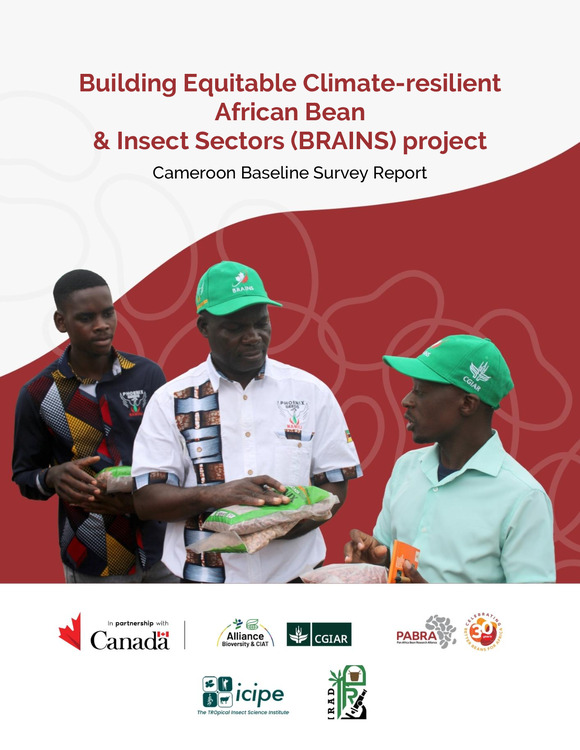
Cameroon has been grappling with food insecurity and undernourishment in the past decades as key developmental challenges. This will worsen over the years unless drastic measures are taken to reverse food insecurity. Women and youth in the country face severe barriers in accessing various resources required for climate adaptation, such as education, land, information, skills, access to power structures and decision-making fora, nature-positive agricultural inputs, climate adaptation tools and technologies, and sources of sustainable finance. A baseline study was conducted to collect data on the full range of income-generating activities and accounts for access and control of productive resources such as bean, fruit tree and insect value chains in three regions of Cameroon. Data was collected by a multi-stage sampling technique from 658 using a structured questionnaire designed in SurveyCTO and analyzed using STATA software. Our result revealed that 80% of male-headed households. All the value chains had an aging farming community, with an average age above 50. Most household heads were monogamously married and attained primary, secondary and tertiary education. Respondents in the West and Adamawa regions relied largely on on-farm casual labor, while the South Westerners depended on their agricultural production. The average landholding size across the region was approximately 5 hectares, with about 3 hectares dedicated to farming. Over 50% of respondents had received training on agro-weather information, except in the West region. Awareness of carbon markets in agriculture remains low, with less than 15% of respondents familiar with carbon credit. More than 50% of the respondents in the Southwest region participated in resource-efficient crop farming and selective cutting down of trees. The membership in agricultural production, marketing groups, and insect farming was notably low across the three regions. Informal financing mechanisms, primarily cash loans from lenders, were the most common source of credit but were accessible to less than 15% of the respondents. Household heads, typically men, made decisions regarding credit sources and usage.
. Local bean varieties were the most popular choice among farmers in all the regions, particularly in the Adamawa region, with > 95% adoption. Agro-dealers were the primary seed source for farmers in the West and Southwest, except in Adamawa [<12%]. Crop rotation, soil conservation, cover cropping and agro-forestry were the predominant management practices across the regions. Adamawa region recorded the highest yield of beans. Most beans were sold to institutions, traders, exporters and importers, followed by household consumption and seed retention. Over 50% of the avocado, citrus and mango produced were sold in the local/village market or exported. However, pests and diseases were the primary threat to fruit production, contributing to substantial economic losses. Management practices of these pests and diseases on avocados and mangoes heavily relied on parasitoid release.
Women and men were more likely to make decisions regarding credit sourcing, sales and use of income. Awareness of insect-derived livestock feed was generally low across the regions. Both male and female respondents reported Honeybees as the most common pollinators across all regions. Over 80% of respondents in the West and Southwest regions reported no noticeable changes in pollinator populations. Adamawa region significantly outperforms the West and Southwest regions in honey production and sales from both modern and local hives. Over 50% of the households were within the acceptable food consumption score category, indicating adequate dietary intake. Most households [>97.42%] consume 6-12 food groups, indicating a relatively diverse diet and balanced food consumption across the regions. These findings demonstrated the need to co-develop climate resilience-focused business operations that encompass multiple sources of income and carbon-friendly, gender-equitable strategies that can reduce emissions across targeted production systems along the different value chains.