
Building climate-resilient agriculture and reducing post-harvest losses in Kenya’s North Rift region: Insights from a multi-stakeholder engagement on climate change, agricultural innovation, post-harvest management, capacity development,…
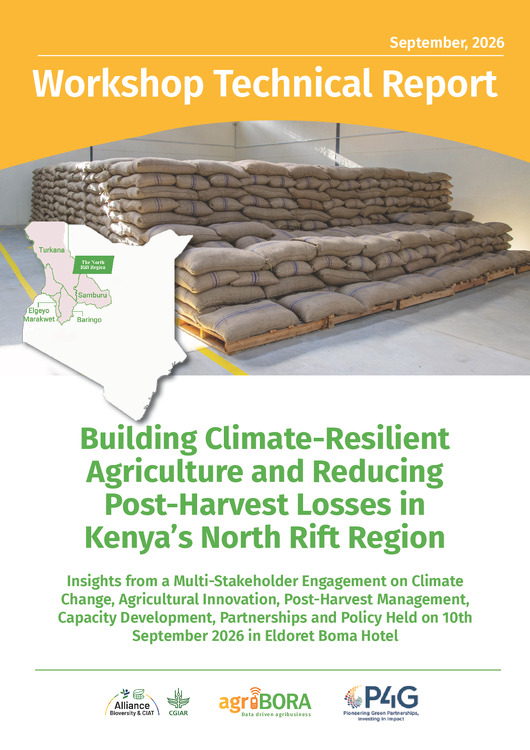
Kenya’s North Rift region serves as the nation’s grain basket, yet it is facing mounting challenges from climate change that threaten food security at both county and national levels. This report synthesizes key insights from a multi-stakeholder engagement that brought together agricultural officers, meteorological experts, farmers, warehouse operators and development research partners to examine the interconnected issues of climate change, agricultural innovation, post-harvest management, capacity development, partnerships and policy frameworks.
The engagement highlighted the severity of recent maize production challenges. Workshop-reported estimates indicate that some areas experienced crop losses of up to 70% during the 2026 season, while maize production reportedly declined from a target of approximately 5 million bags to about 1.5 million bags. Post-harvest losses add a further estimated 30% reduction, meaning that only about half of potential production may ultimately reach consumers when climate-related production losses and post-harvest losses are considered together. These figures demonstrate the need for coordinated and sustained action across agricultural production, storage, markets, information services, policy and financing. The report identifies climate-smart agricultural practices, improved seed varieties, soil health management, climate information services, warehouse receipt systems and improved post-harvest technologies as important avenues for strengthening resilience. It further emphasizes the need to strengthen agricultural extension services and farmers’ capacity to interpret climate information and translate forecasts into practical farm-level decisions. Diversification, digital and financial literacy, improved storage, quality assessment and integrated pest management are also identified as important components of a resilient agricultural system.
Effective implementation will require stronger collaboration among government institutions, research and academic organizations, development partners, private-sector actors and farmer organizations. The report therefore recommends improved coordination between meteorological services and agricultural extension, expanded last-mile dissemination of climate information, increased investment in extension services, strengthened post-harvest management, expansion of the warehouse receipt system, greater access to climate finance, supportive policies, stronger monitoring and evaluation, and improved market linkages.