
Between challenges and opportunities: Identifying innovations for Honduras´ food system to improve diet quality
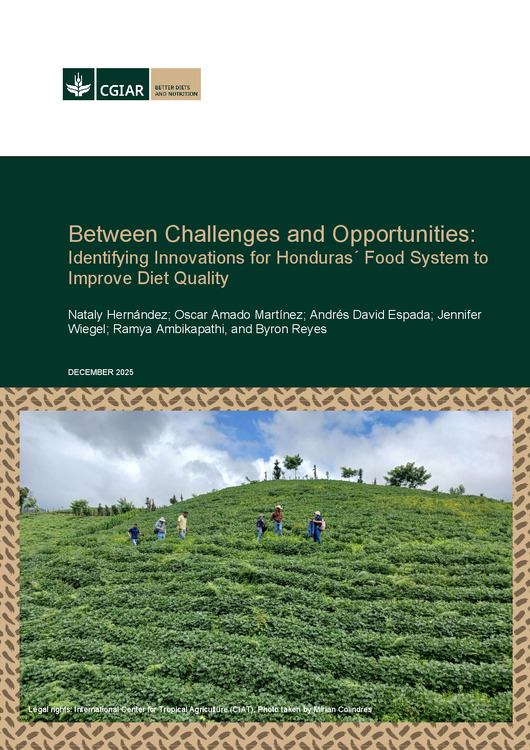
This study examines potential innovations to strengthen nutrition and diet quality in Honduras through an integrated analysis of food and nutrition security policies and nutrition-sensitive value chains. The analysis identifies key structural gaps and strategic opportunities affecting food system performance. Although Honduras has an established institutional framework for food and nutrition security, public action remains largely oriented toward production and markets, with nutrition insufficiently integrated as a core objective. This results in governance weaknesses, limited inter-institutional coordination, challenges in territorial implementation, and gaps in nutrition indicators, financing, and intervention sustainability. The value chain analysis highlights beans as a dietary staple and one strategic entry point for improving diets, yet their potential is constrained by high intermediation, price volatility, post-harvest losses, limited nutritional differentiation, narrow varietal preferences, and high consumption of ultra-processed foods. In response, the study identifies eight priority innovations across governance, market, and community dimensions. Together, these innovations provide a roadmap for advancing more resilient, inclusive, and nutrition-centered food systems in Honduras.