
‘Best Bets’ for Gender-Responsive Digital Climate Advisory Services (DCAS)
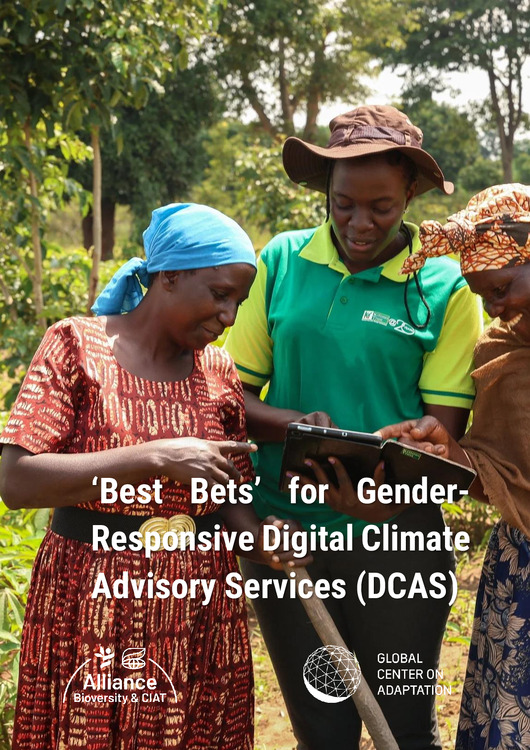
Gender-responsive DCAS reduce access and use barriers by prioritising multimodal delivery (including voice and radio), local language and culturally resonant formats, schedules aligned to women’s routines, and trusted intermediaries such as women extension agents, producer organisations and savings groups (Huyer et al., 2017). A gender-responsive approach therefore strengthens DCAS effectiveness at each step of the chain. It improves reach by using channels that work for women (voice/IVR, radio, USSD alongside apps), local languages, and delivery times that fit women’s routines. It strengthens uptake and trust through co-production, culturally resonant formats, and trusted intermediaries such as women extension agents, producer groups, and savings groups. And it improves actionability by aligning recommendations with what women can realistically implement and by linking advisories to “enablers” such as inputs, extension follow-up, market access, credit, or insurance—reducing the information-to-action gap that drives unequal impact. In practice, building gender responsiveness into DCAS strengthens product-market fit, increases sustained use, and improves the likelihood that scaled digital advisory systems deliver both climate resilience and equitable development outcomes. Finally, gender-responsive monitoring—sex-disaggregated use, outcomes, and complaints data—makes it possible to see whether the service is genuinely reducing climate risk for women and men, and to adapt the model before inequities become locked in at scale (Gumucio et al., 2022). In short, gender responsiveness is not only about fairness; it is a practical condition for DCAS to reliably solve the problems it is meant to address at scale.