
Assessment of waterpoints in Somali Region, Ethiopia
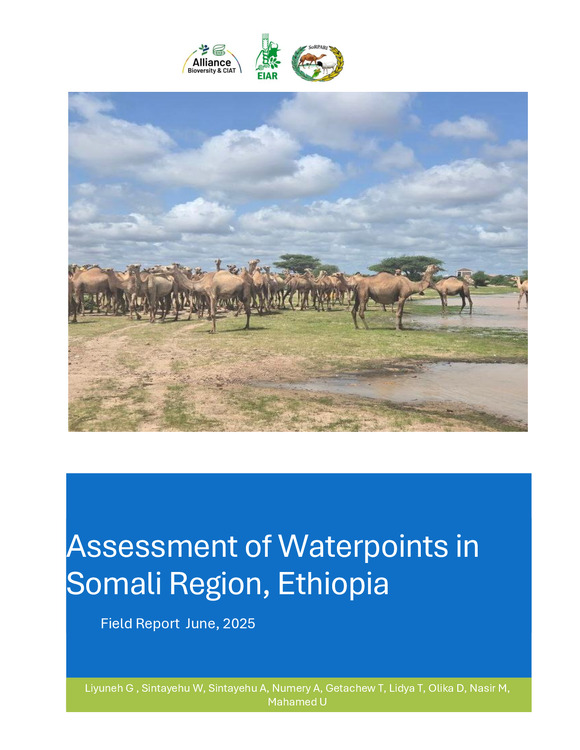
Water availability is a key constraint on pastoral livelihoods in Ethiopia’s Somali Region. The rising climate variability, recurrent droughts and deteriorating water infrastructure posed risks on livestock production and livelihoods intact in the pastoral communities of the region. This study assesses the spatial distribution and functional status of waterpoints across five zones Fafan, Jarar, Korahe, Dolo, and Shebelle. Field assessments integrated GPS ground truthing, water depth measurements, visual condition assessments, and participatory inputs from community elders and woreda experts, with data collected using Kobo Toolbox. The assessment identified several waterpoints in urgent need of rehabilitation, while a smaller number were found to be strategically critical, providing reliable water supply during extended dry periods. The assessment also generated new, verified waterpoint information that is essential for incorporation into the existing waterpoint and pasture monitoring system, thereby expanding its spatial coverage and improving data completeness. The findings underscore the importance of targeted rehabilitation efforts and the expansion of waterpoint and pasture monitoring and early warning systems to strengthen pastoral livelihoods and enable informed decision making.