
Advocacy training report –Cameroon. Building Gender Equitable Resilience for Adaptation to Climate Across Bean Crop and Insect Corridors (BRAINS)
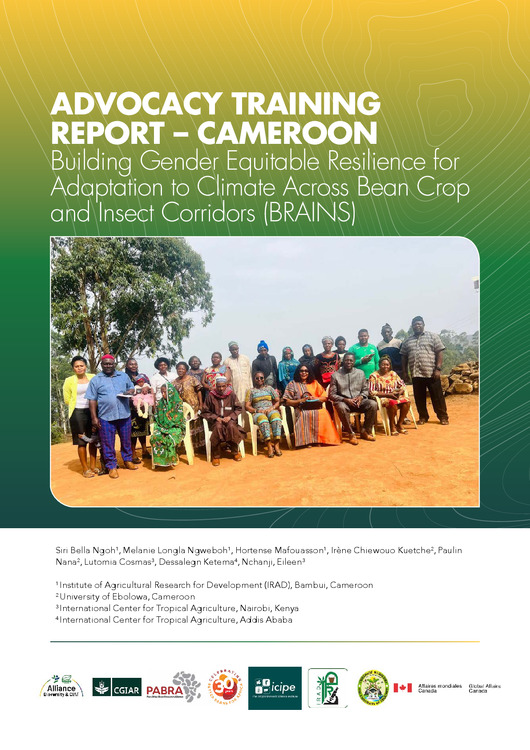
An advocacy training workshop, held in Akum, in the Northwest Region of Cameroon, on March 11–12, 2026, aimed to strengthen the capacity of community members to influence decision-making and address development challenges, primarily within the agricultural sector. The two-day workshop empowered 23 local actors (15 women and 8 men), representing traditional authorities, community leaders, and farmers’ groups, to move beyond technical solutions toward social and policy change. This effort was part of the BRAINS Project, implemented by the Alliance of Bioversity International and CIAT in partnership with partners including IRAD, ICIPE, PABRA, and the University of Ebolowa, with funding from Global Affairs Canada.
The training utilized participatory methods to cover essential topics, including defining advocacy, identifying key community issues, stakeholder mapping, building SMART advocacy strategies, and mastering negotiation and communication skills. Working in four groups (representing leaders, cooperatives, youths/women, and teachers), participants identified critical challenges such as limited access to improved seeds, bad roads hindering transport, and insufficient water for irrigation. They then developed mini-advocacy plans, clarifying target audiences (local councils, MINADER, IRAD), crafting key messages, and choosing tactics like dialogue and formal letters.
Overall, the workshop was evaluated as a major success. All participants (100.0%) reported that the training content was highly relevant to community problems and that they felt safe expressing their opinions throughout the sessions. They praised the facilitators and the easy-to-digest language. Madam Nehbuh Cho Shella, President of the Akum Mixed Farmers Group, provided a testimonial, describing the experience as "transformative" and expressing eagerness for future sessions. Facilitators rated active participation at 95% and concluded the workshop by urging attendees to disseminate the knowledge to the wider population and promising to convey the identified community issues to relevant higher authorities.