
Advocacy training in Chipinge, Zimbabwe. Building Gender Equitable Resilience for Adaptation to Climate Across Bean Crop and Insect Corridors (BRAINS)
The Advocacy training tool, developed under the BRAIN project, provides a comprehensive framework designed
to empower women leaders and entrepreneurs. The primary purpose of this facilitation guide is to equip
community champions with the practical skills and strategic insights required to effectively advocate, negotiate,
and engage in complex policy processes. By focusing on women as active economic agents rather than passive
beneficiaries, the tool builds their capacity to influence critical decisions and promote inclusive governance
across household, community, and market levels.
To achieve this, the curriculum employs a highly participatory methodology that draws directly from the
participants lived experiences to solve practical problems. It guides learners through specialized, hands-on
sessions focused on root cause analysis, stakeholder power mapping, and the development of SMART advocacy
strategies. A key differentiator of the training is its emphasis on interest-based negotiation—teaching advocates
how to look beyond public demands to identify underlying needs, thereby achieving sustainable, “win-win”
policy outcomes. Furthermore, the manual integrates evidence-based communication strategies with personal
storytelling, ensuring that participants can clearly articulate their realities to decision-makers.
Ultimately, this training is designed to confront the structural, cultural, and institutional barriers that maintain
unequal power dynamics. By fostering collective action and building resilient alliances, the tool equips women
leaders with the professional skills necessary to navigate political landscapes, champion equitable resource
allocation, and drive the transformation of agricultural and social systems from the ground up.
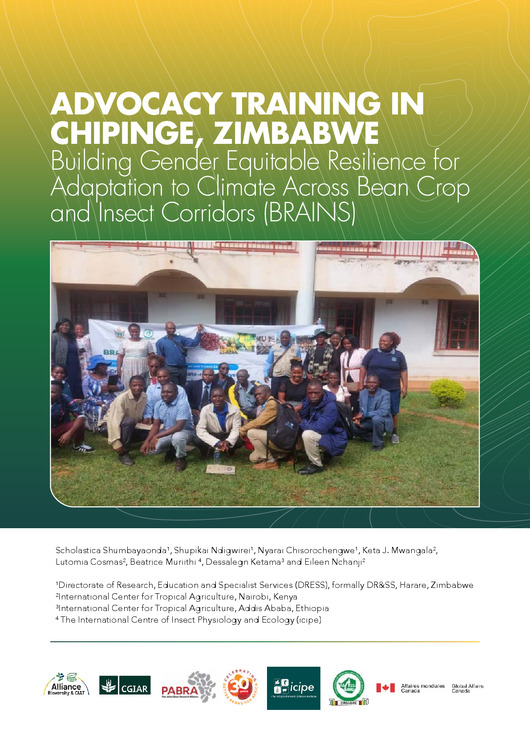
This training was conducted in Chipinge District, which brought together a diverse group of key community
and institutional leaders including traditional leader Chief Ngungunyana Chiefs and Village Head, as well as
representatives from social services, extension services, farmer groups, education, health, and the security sector.
A total of 32 participants were trained with 13 men, 5 young men, 10 young women and 4 women reflecting a
deliberate effort to promote inclusivity and amplify the voices of often underrepresented groups.
The high level of participation observed during the sessions indicated a growing commitment among leaders to
initiate and support advocacy efforts within their respective sectors.