Research Articles Why climate-smart dairy farming in Kenya needs more than knowledge
A recent case study in western Kenya offers valuable insights into persistent gaps, and what it will take to close them. By examining how dairy farmers understand, perceive, and value climate mitigation strategies, the research sheds light on the social foundations of climate-smart agriculture and why technical solutions alone are not enough.
Climate change is no longer an abstract concept for smallholder farmers in East Africa. In Kenya’s dairy heartlands, farmers are living with its consequences every day: erratic rainfall, declining pasture quality, heat stress in cattle, and rising production risks. Yet while awareness of climate change is high, translating that awareness into concrete climate action on farms remains a challenge.
A recent case study from western Kenya offers valuable insights into why this gap persists – and what it will take to close it. By examining how dairy farmers understand, perceive, and value climate mitigation strategies, the research sheds light on the social foundations of climate-smart agriculture and why technical solutions alone are not enough.
Climate change and dairy farming: A two-way relationship
Livestock systems sit at the center of a global paradox. On the one hand, ruminant production contributes significantly to greenhouse gas emissions, particularly methane. On the other, livestock producers, especially smallholders, are among the most vulnerable to climate shocks.
In Kenya, dairy farming is dominated by small-scale producers who depend on rain-fed systems and limited land. Climate variability directly affects feed availability, milk yields and household income. Heat stress reduces animal productivity, while pasture degradation increases feeding costs and labor demands. These pressures are intensifying, making climate resilience an urgent priority.
At the same time, dairy systems offer opportunities for mitigation. Improved forages, better herd management, and integrated pasture systems can reduce emissions per unit of milk while improving productivity. The question is not whether solutions exist – but whether farmers are willing and able to adopt them.
Looking beyond technology: The social valuation approach
Most climate mitigation efforts focus on technical potential: how much emissions can be reduced, or how much productivity can increase. This study takes a different angle by asking a more fundamental question: How do farmers themselves value these mitigation strategies?
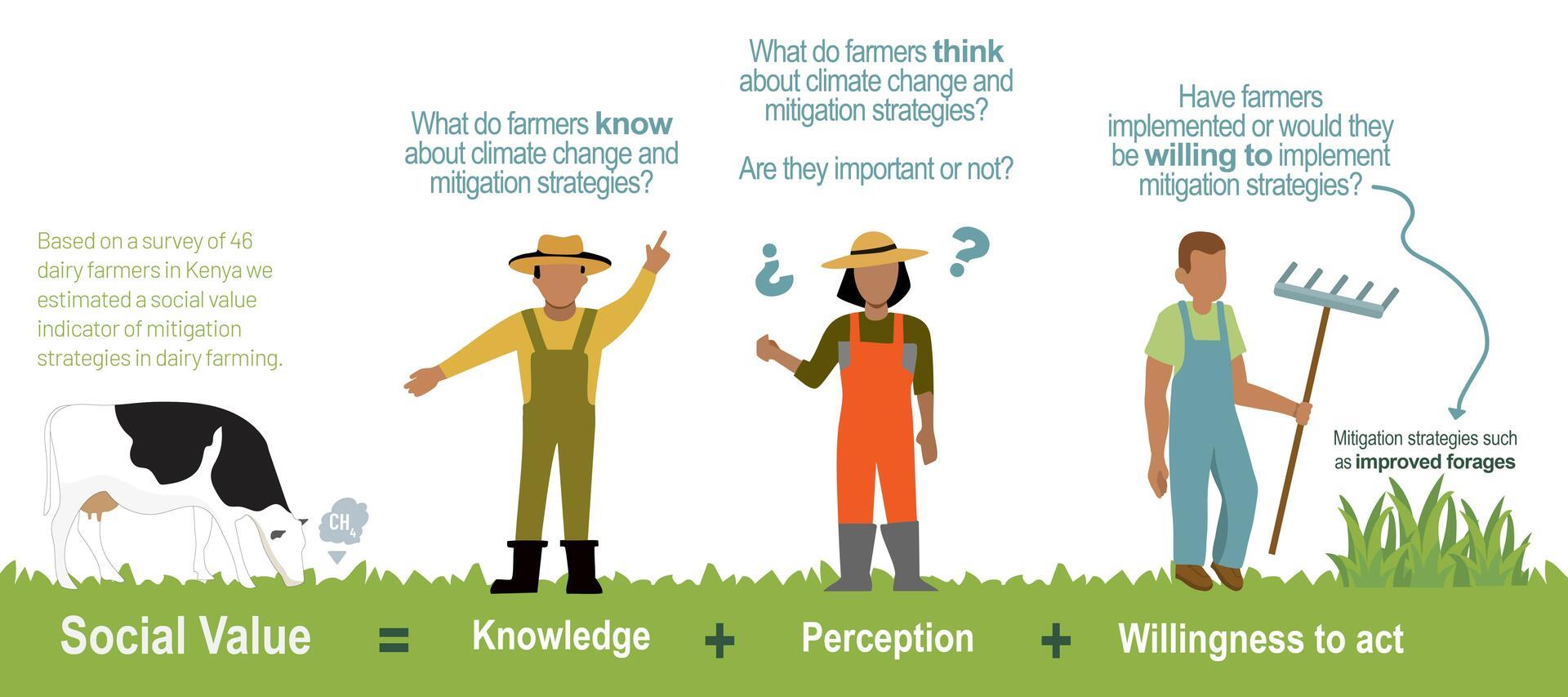
Using a social valuation framework, the researchers examined three interconnected dimensions:
- Knowledge: what farmers know about climate change and greenhouse gas emissions
- Perception: how they view climate risks and the relevance of mitigation
- Willingness to act: whether they feel ready and able to adopt mitigation practices
Together, these dimensions form a composite 'social value' indicator that captures not just awareness, but readiness for action.
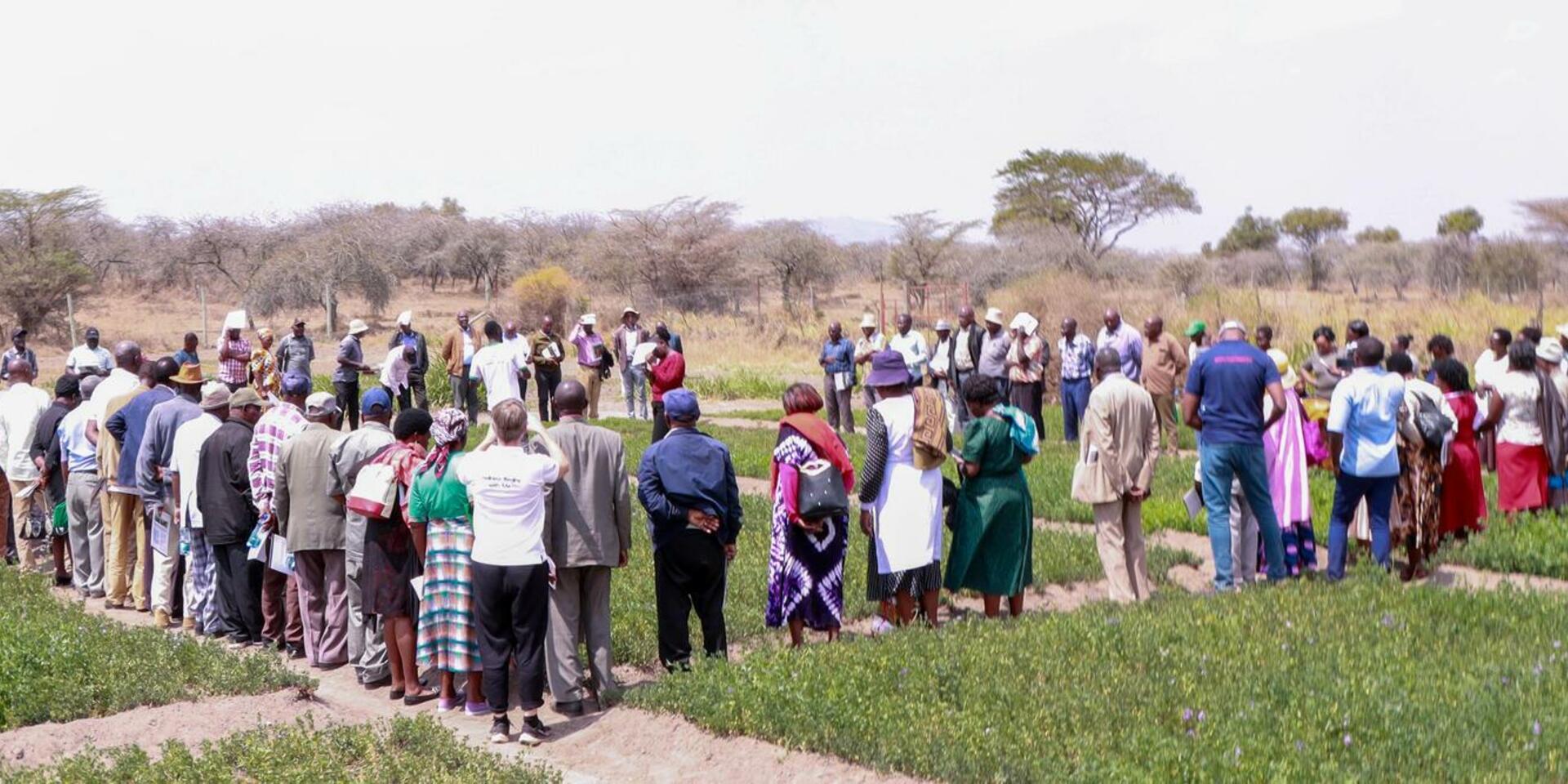
The study focused on 46 smallholder dairy farmers in Nandi and Uasin Gishu counties, all of whom had prior exposure to improved forage technologies through development and research initiatives.
Improved forages: Valued, but not easily adopted
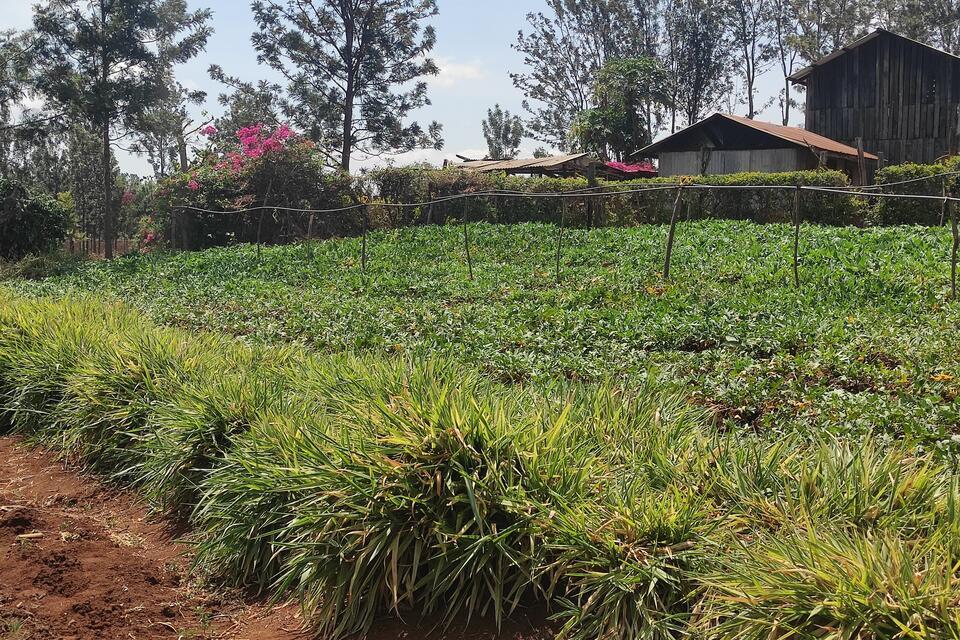
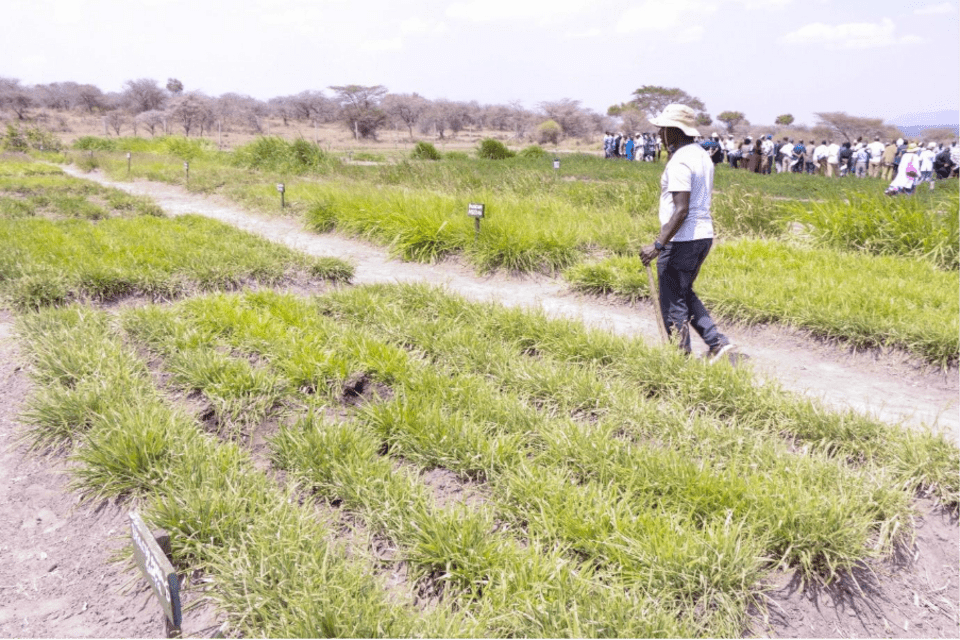
The study paid particular attention to improved forages, which are known for their deep root systems, high nutritional value, and potential to reduce emissions intensity.
Farmers clearly recognized the benefits. Improved forages were widely perceived as a pathway to:
- Higher milk yields
- Better feed quality
- Greater resilience to climate variability
- Environmental benefits such as soil carbon sequestration
When asked to choose preferred mitigation strategies, most farmers selected options that combined improved forages with herd management improvements. These choices were driven primarily by productivity and income gains, with climate mitigation seen as an added bonus rather than the main motivation.
In contrast, manure management – often promoted in global mitigation strategies – was the least attractive option. This highlights the importance of aligning climate interventions with farmers’ economic priorities and lived realities, rather than assuming universal relevance of mitigation measures.
High awareness, strong concern, but limited action
One of the clearest findings is that knowledge is not the limiting factor.
Nearly all surveyed farmers recognized that climate change is happening in Kenya; they understood that human activities play a major role, and were aware of greenhouse gas emissions. Climate change was not seen as a distant threat – it was perceived as a present and growing risk to farms, families, and livelihoods.
Perceptions followed a similar pattern. Farmers reported thinking frequently about climate change and discussing it within their communities, and both men and women expressed concern about its impacts on dairy production.
Yet, when it came to willingness to act, the picture changed sharply Despite high awareness and concern, most farmers felt unable to implement mitigation practices. The study’s willingness-to-act indicator was strikingly low compared to knowledge and perception scores. More than 90% of respondents reported lacking sufficient financial resources to adopt mitigation measures. This reveals a persistent and familiar gap: awareness does not automatically lead to adoption.
Gender and youth: Unequal capacity, not unequal interest
The study also revealed important social differences beneath the overall averages.
Women farmers showed levels of climate awareness comparable to men and expressed strong interest in receiving training. In fact, women were often more optimistic about the possibility of reducing emissions. However, they reported lower preparedness and virtually no access to the necessary resources.
This gap reflects broader structural barriers: limited access to credit, training, land, and decision-making power. Women’s challenge is not motivation, but capacity.
Meanwhile, youth faced a different constraint. Younger participants tended to perceive climate risks as less immediate, likely due to limited farming experience and growing disengagement from agriculture. This suggests that climate-smart dairy strategies must also compete with broader rural livelihood dynamics, including migration and employment opportunities.
Why social value matters for climate policy
By combining knowledge, perception and willingness to act into a single social value indicator, the study demonstrates a critical insight: social acceptance alone does not guarantee adoption.
The overall social value of climate mitigation strategies was classified as 'high', indicating strong potential for engagement. Yet without addressing financial, technical, and institutional barriers, this potential remains unrealized.
This has direct implications for climate policy and development programming:
- Awareness campaigns are necessary but insufficient
- Technology demonstrations must be paired with access to inputs and finance
- Extension services need to be inclusive, decentralized and context-specific
- Climate finance mechanisms must reach smallholders in practical ways
In short, climate-smart agriculture must be as socially grounded as it is technically sound.
Moving from awareness to action
The Kenyan dairy case study underscores a broader lesson for climate action in agriculture: farmers are ready, but systems are not.
Smallholder dairy farmers already understand climate risks and value solutions that improve both productivity and sustainability. What holds them back is not skepticism, but constraint. Bridging the gap between awareness and action requires investments that lower adoption costs, strengthen extension systems, and address gender and youth inequalities.
Improved forages offer a powerful entry point because they align climate mitigation with farmers’ immediate priorities: better milk production, higher incomes, and resilience. When mitigation delivers tangible benefits on the ground, it becomes not an obligation, but an opportunity.
As countries work to implement their climate commitments and transform food systems, studies like this remind us of a simple truth: climate solutions succeed when they make sense to the people expected to use them. Social valuation provides a valuable lens for ensuring that climate strategies are not only effective on paper, but viable in practice.
Acknowledgements: This work was carried out as part of the CGIAR Science Programs on Multifunctional Landscapes (MFL), Climate Action (CA), and Sustainable Animal and Aquatic Foods (SAAF), as well as the CGIAR Initiatives on Livestock & Climate (L&C) and Sustainable Animal Productivity (SAPLING). It was also supported by the Bezos Earth Fund. We thank all donors who globally support our work through their contributions to the CGIAR System. The views expressed in this document may not be taken as the official views of these organizations.